hamilton khaki field automatic
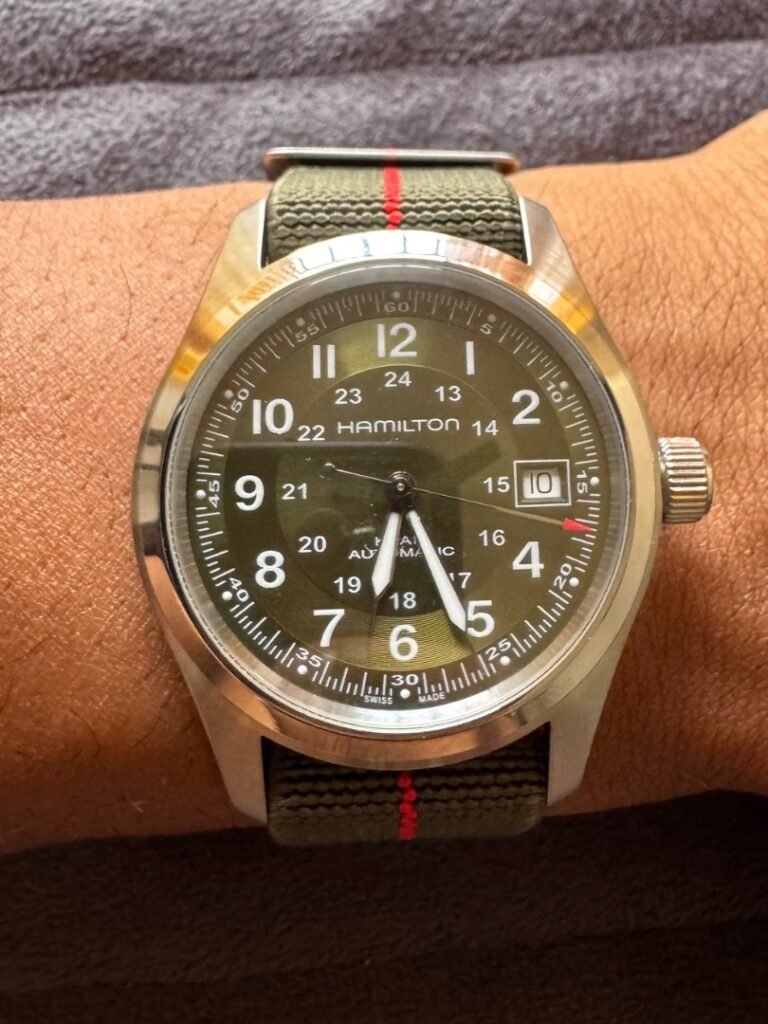
On my trip to South Korea, I got this beautiful Hamilton Khaki Field Automatic, and I have been totally in love with it ever since. My entire YouTube feed is now full of Hamilton and field watches, and my love for the brand has grown multiple folds since getting this watch.
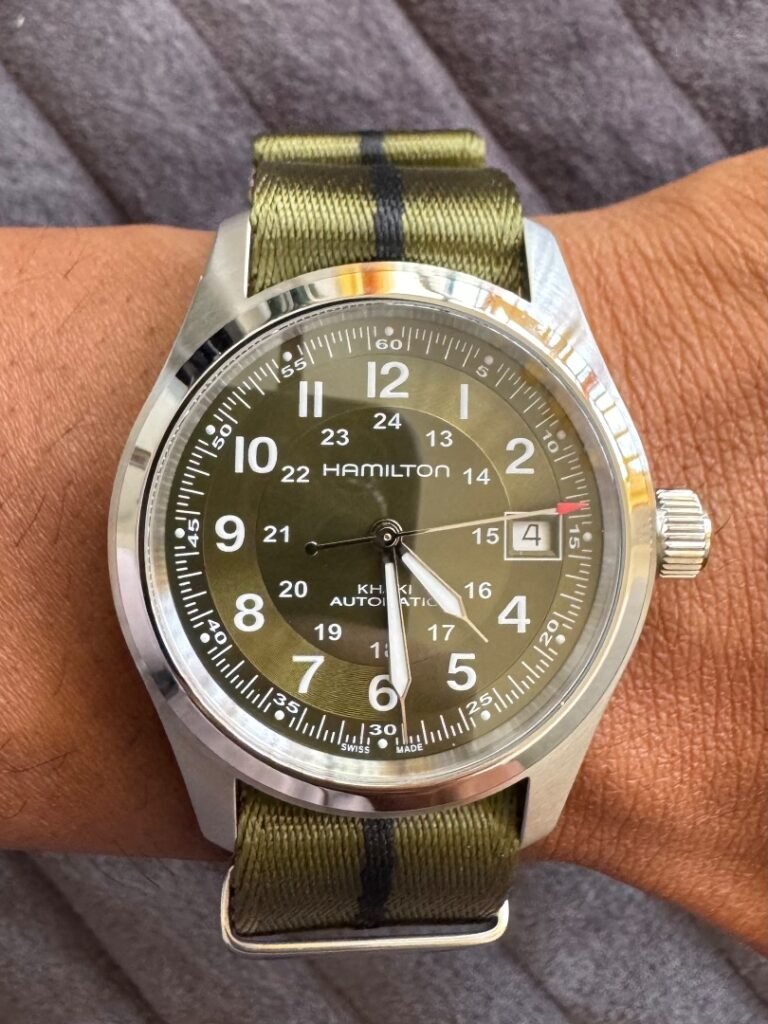
I loved Hamilton even before buying this watch, partly because of the rich history & heritage of the brand and partly because of Interstellar. In fact, I wanted a Hamilton to be my first watch, but back in 2024, the brand had no presence in India. So I had to look through the Tissot catalogue for my first Swiss.
Let’s talk about the watch, but not from a reviewer’s perspective, as I feel it’s still too early to review it. Instead, I just want to share my initial experience of owning this watch. Let’s discuss the good, the bad, and the ugly.
The Good
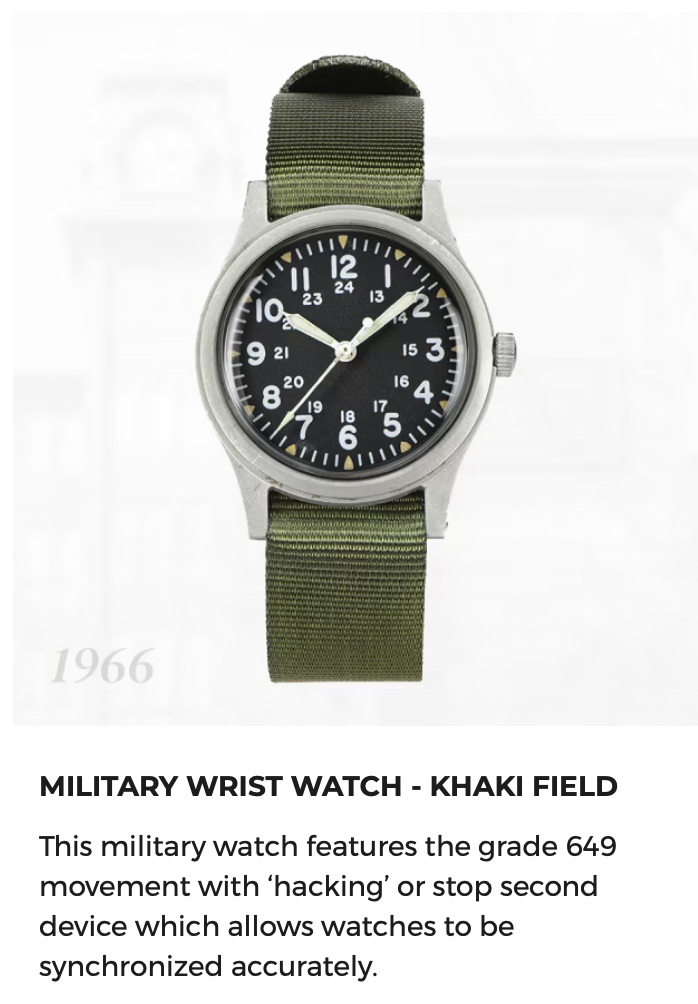
The Khaki Field Automatic (KFA) is a recreation of the field watches Hamilton supplied to the US Armed Forces during the Vietnam War. While the Hamilton Khaki collection is deeply associated with World War II, this particular design traces its roots to the Vietnam War. However, for this 2025-released automatic variant, Hamilton has introduced a few thoughtful upgrades that make the watch a bit more versatile while remaining incredibly faithful to the original design, with its dual 12/24 hour layout, original fonts, and syringe hands.
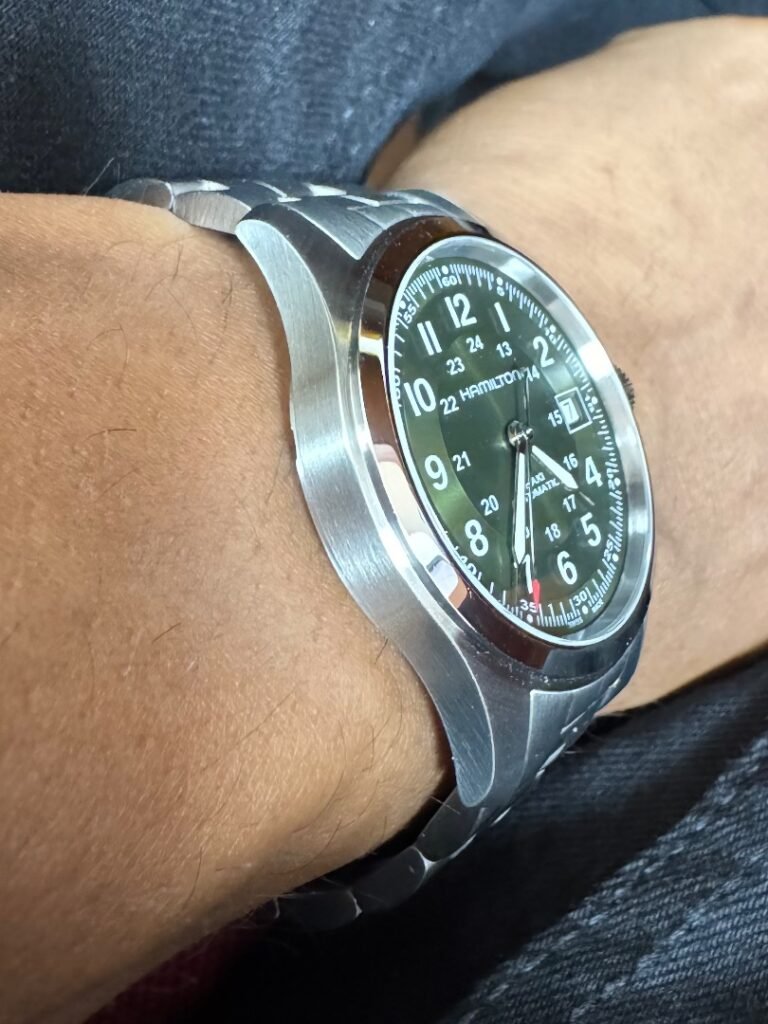
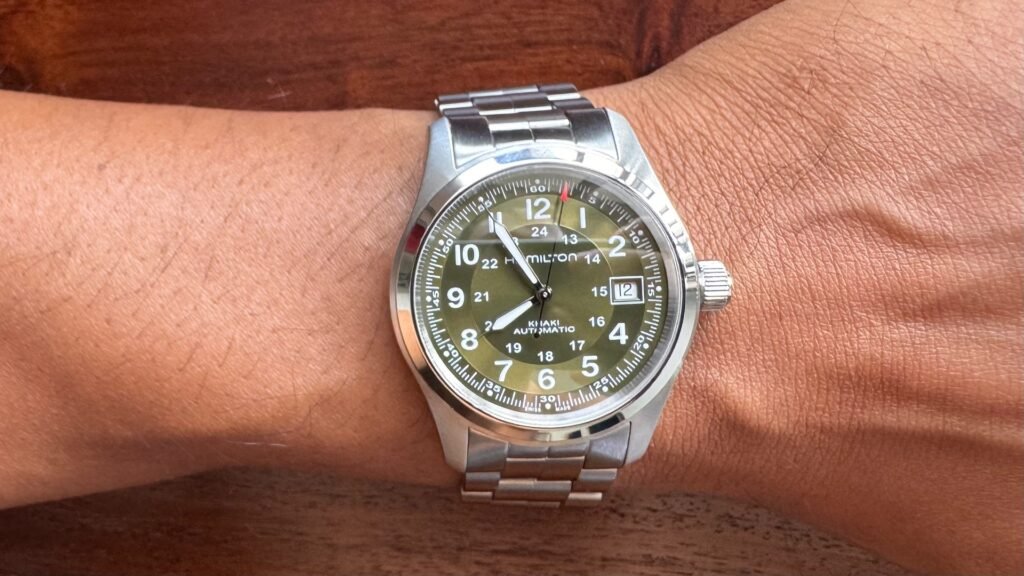
The KFA I picked up is the 2025 released green dial variant on the bracelet. It features a dual-finish dial, with a sunburst finish on the inner 24-hour track and the outer minute track. Sandwiched between them is a snailed 12-hour track that gives the dial a subtle vinyl record vibe. The tip of the arrow-pointed seconds hand is painted red, adding a subtle pop of colour that beautifully complements the dial. The dial plays beautifully with the light. Under bright light, it shows off its rich olive-green colour, while in dim indoor lighting it almost takes on a subtle greyish-silver appearance.
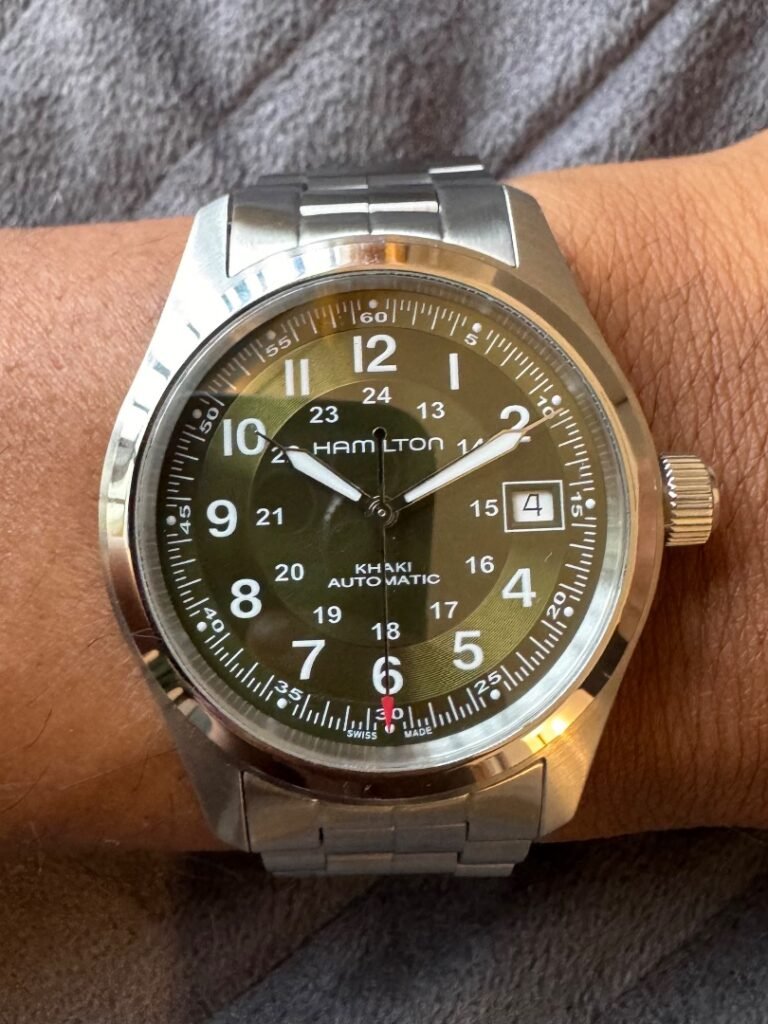
The watch also features a framed white date window at 3 o’clock, which maintains the symmetry with the white hour markers and blends subtly into the dial. The date window is a significant departure from the original design, but I actually like it. I’ve started relying on my watches for the date, and I often find myself checking the date even on my Tissot Heritage Porto, which doesn’t have one.
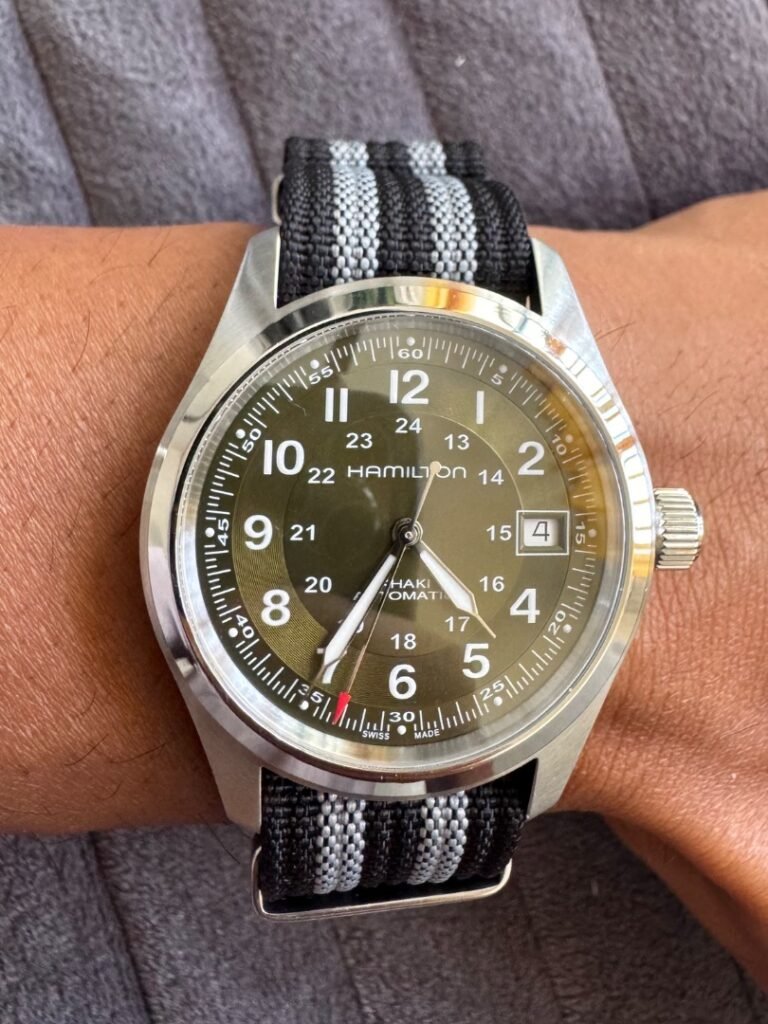
Apart from the date, the minute track now features numerical minute markers instead of the triangular symbols found on the original design. The lume is applied only to the hour and minute hands, along with the dots above the minute markers. The dial is incredibly legible, and I can comfortably read the time with just a quick glance.
The watch features an exhibition caseback that showcases the beautiful ETA C07.611 movement, a modified version of the ETA 2824-2. It offers an impressive 80-hour power reserve and beats at 3 Hz. The movement is around 95% similar to the Powermatic 80 Silicium inside my Tissot Gentleman. The only difference is that the Tissot uses a silicon hairspring, while the Hamilton uses a Nivachron hairspring. Although both offer excellent anti-magnetic properties, silicon is technically superior, giving the Tissot a slight edge. That certainly doesn’t mean the Hamilton lags behind. It has been remarkably accurate, running at around ±2 seconds per day.
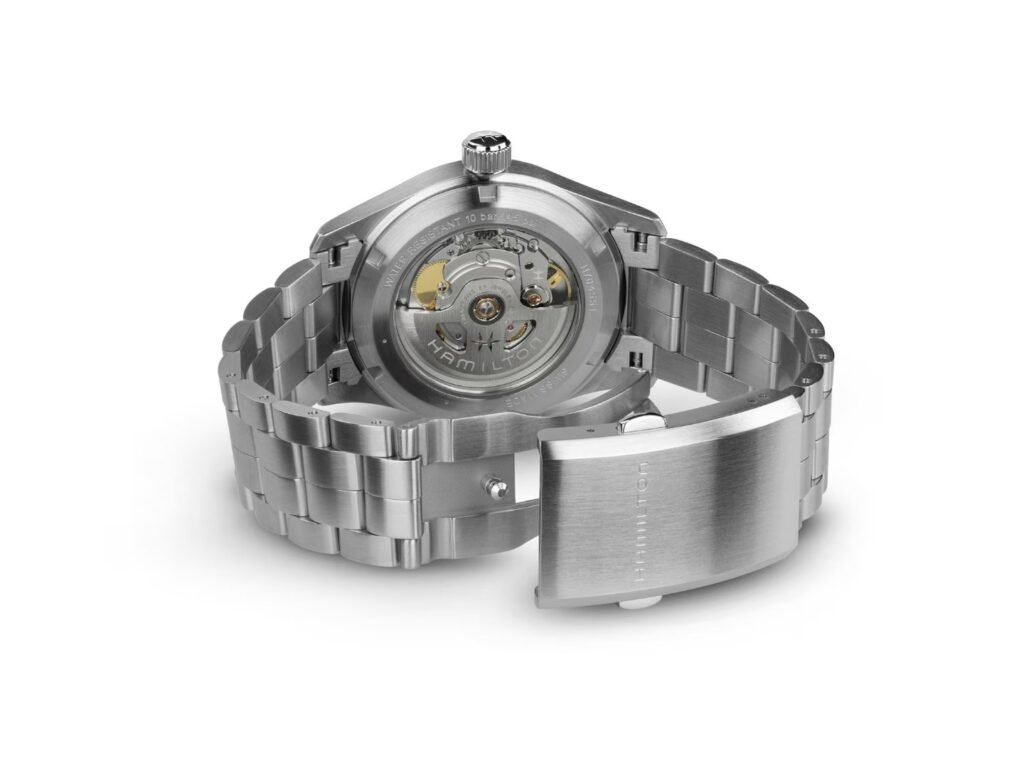
The 38 mm case has a 47 mm lug-to-lug measurement, which is quite long and often becomes a point of debate within the watch community. Personally though, I can almost see the Hamilton “H” formed by those long straight lugs and the circular case, and I think that’s pretty cool.
The crown is slightly oversized for the 38 mm case, but in my opinion, that’s actually an upgrade. I now know how frustrating smaller crowns can be after owning the Citizen Eco-Drive Odyn, whose crown remains my biggest complaint. Setting the time on the Hamilton is effortless in comparison.
The bracelet follows an Oyster-style design, but the centre link is actually split into two narrower links. Initially, I found it a little unusual, but over time I’ve come to appreciate it. I feel it improves comfort and serves a purpose rather than being an unusual aesthetic design choice.
The clasp is a three-fold deployant clasp with three micro-adjustment positions for a better fit. The entire bracelet and clasp feature a brushed finish, which I have really started to appreciate because it hides scratches much better while looking incredibly sharp. The bezel however, is polished, giving the watch just enough versatility to dress up when needed.
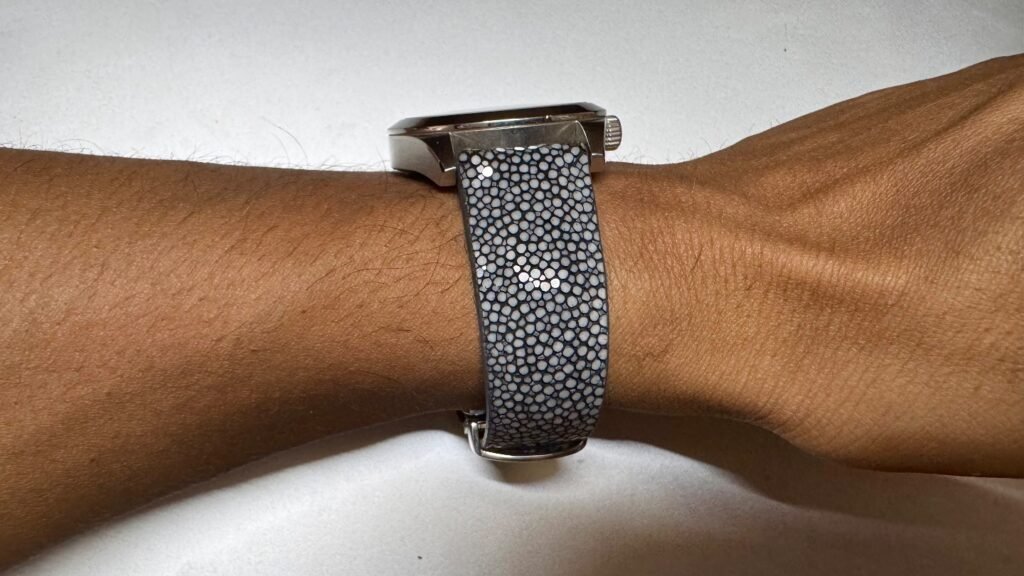
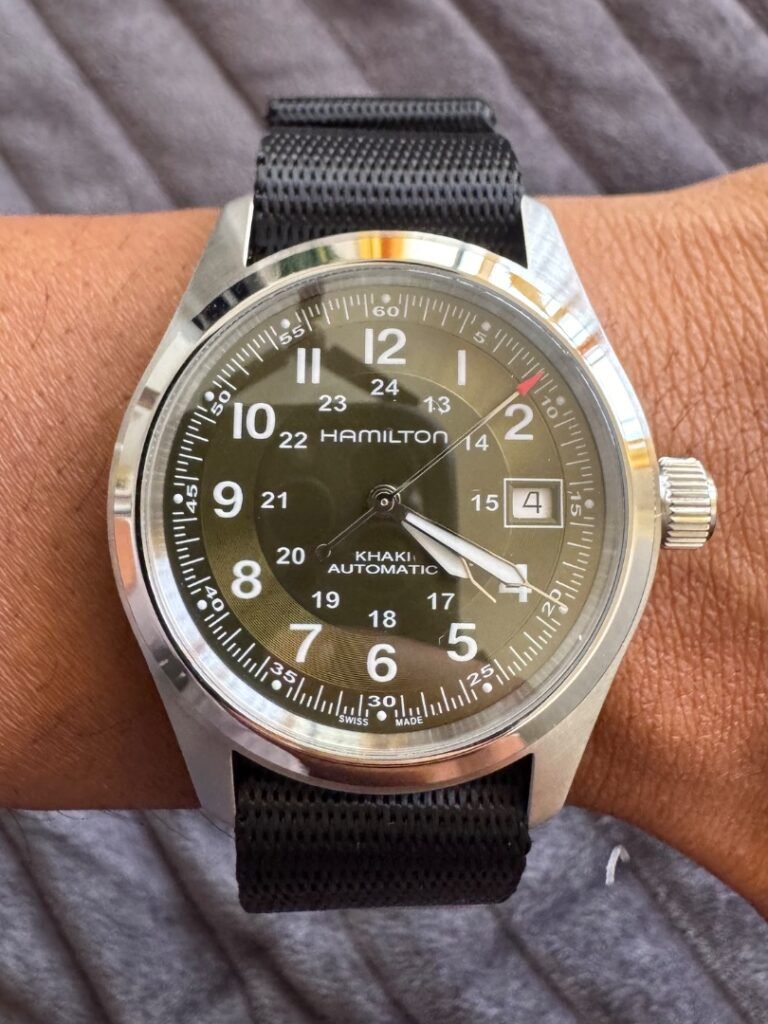
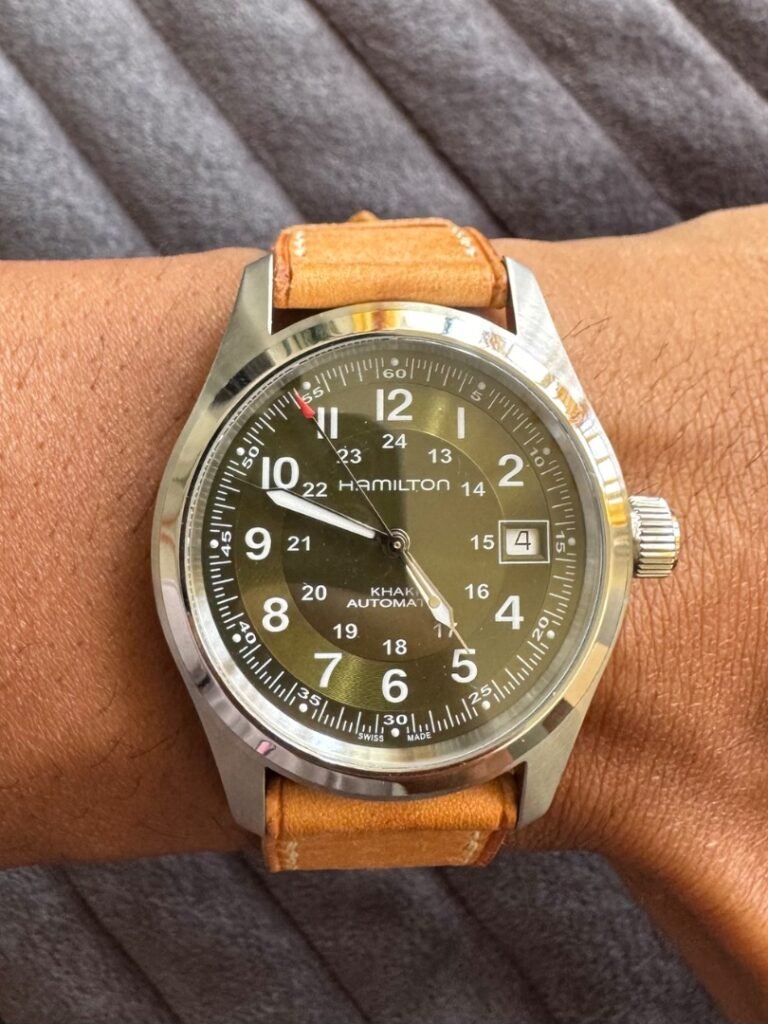
The watch is an absolute strap monster and pairs beautifully with NATO straps, leather straps, and the OEM bracelet. Initially, I wasn’t particularly fond of the bracelet aesthetically, but the more I wore it, the more I appreciated just how comfortable it is. It’s actually my favourite way to wear this watch now. I’ve included pictures of the watch on different straps throughout this article to give you an idea of why I call it a strap monster.
The Bad
The lack of anti-reflective coating on the sapphire crystal remains the biggest letdown of this watch. Personally, I don’t mind the lack of AR coating when it comes to reading the time. In fact, I haven’t found a single instance where reflections made it difficult to tell the time.
Where it does become a problem is photography. It is surprisingly difficult to take good pictures of the watch without reflections taking over the crystal. Those reflections prevent the camera from capturing the beautiful dial underneath.
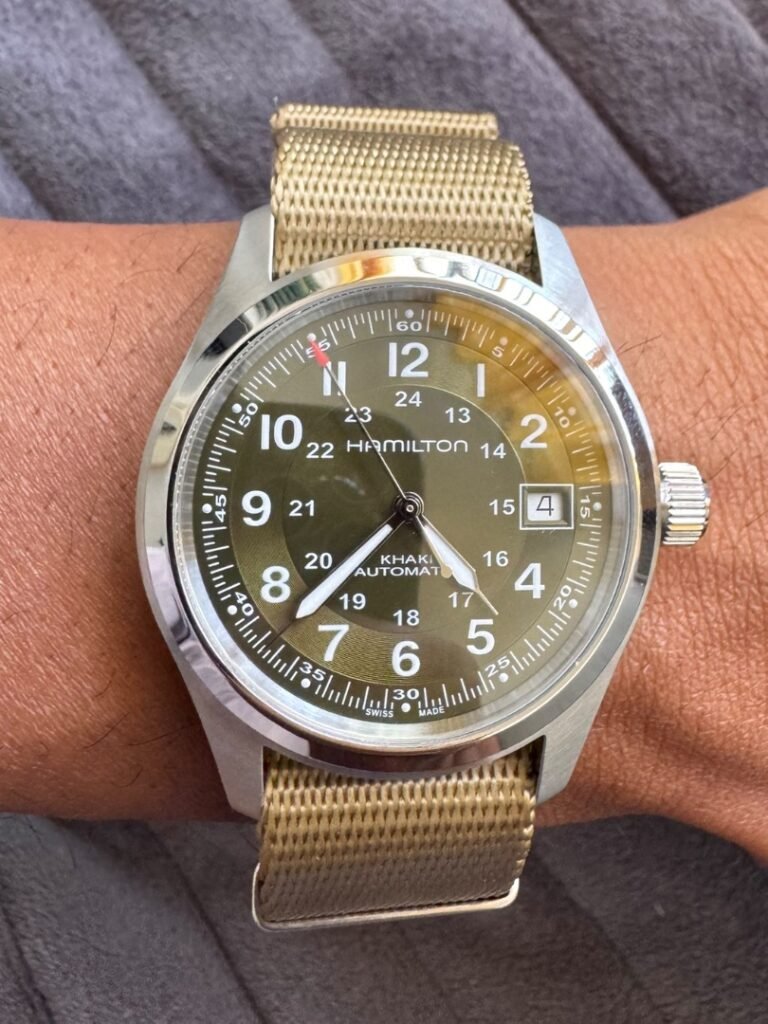
Part of enjoying your watches is photographing them against different backgrounds, wherever you travel, whatever you do. It’s always more satisfying when your watches become associated with your memories and experiences. Not being able to photograph this watch as well as I’d like is probably the biggest reason I wish Hamilton had included AR coating.
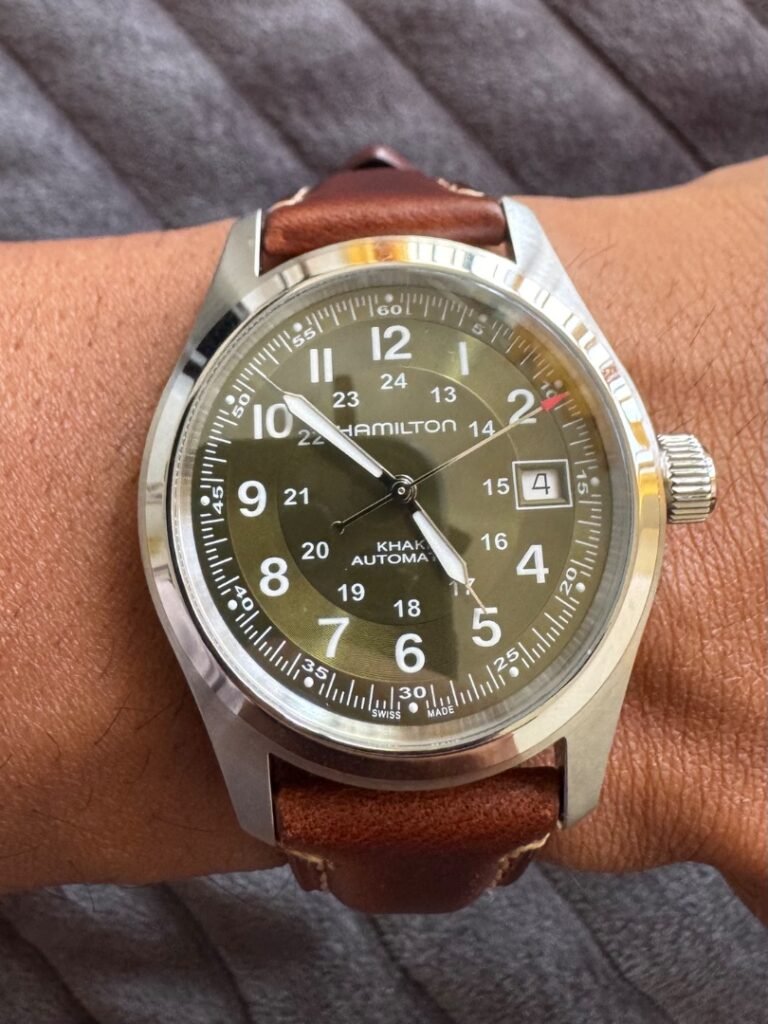
The other criticism often raised by the watch community is the push-pull crown instead of a screw-down crown. Personally, all my watches have push-pull crowns, so I would have preferred a screw-down crown, partly because it’s a field watch and a screw-down crown suits the theme better, and partly because I simply want to experience owning one. That said, it isn’t a major issue. The push-pull crown still provides a perfectly respectable 100 metres of water resistance, making the watch more than capable of handling swimming and other light water activities.
The clasp does feature three micro-adjustment positions, but adjusting the bracelet still requires a tool. A simple on-the-fly micro-adjustment mechanism would have been an absolute game changer.
Similarly, and now I know I’m just being greedy, quick-release spring bars for the bracelet would have been the perfect addition. Considering this watch is such a strap monster, being able to swap between the bracelet and different straps without reaching for a spring bar tool would have made the experience even better.
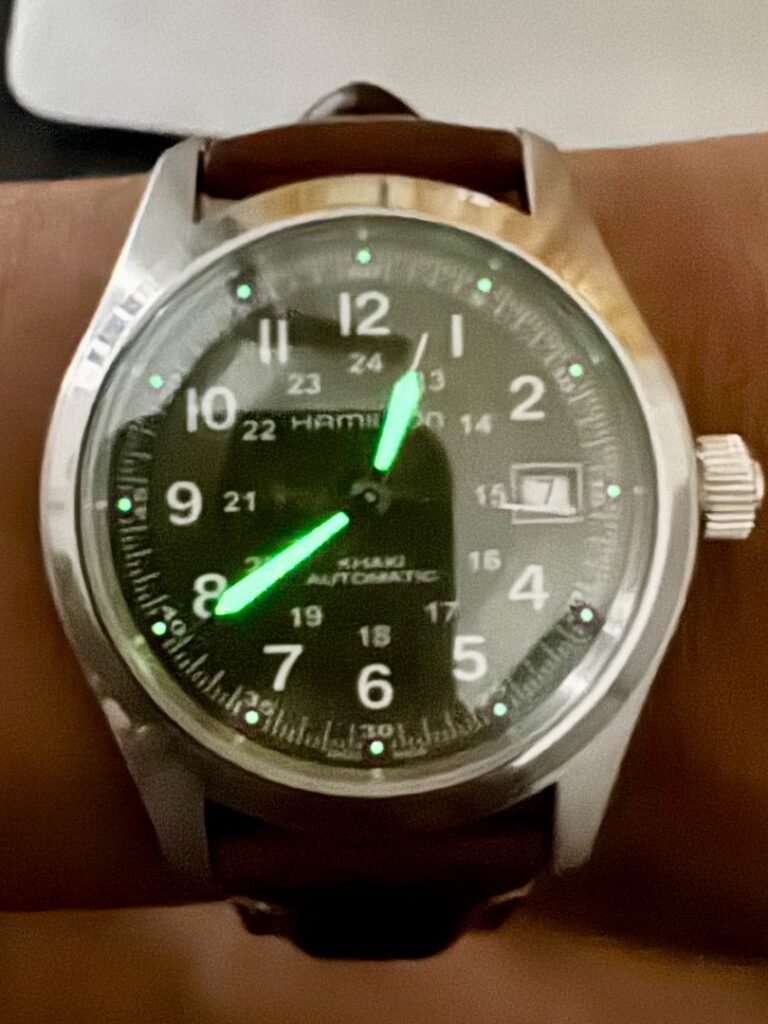
The lume on the watch remains quite weak and doesn’t last very long. The earlier KFA models had lume-filled hour markers, and in my opinion, they offered much better nighttime legibility.
That said, I’m a little conflicted about this. Sometimes I feel the lack of lume on the hour markers actually allows the dial to look more natural in daylight, without looking like something is waiting to glow in the dark. It’s one of those things I need to live with a little longer, and perhaps my opinion on Hamilton’s lume choice will evolve over time.
The Ugly
This section has nothing to do with the watch itself, yet somehow everything to do with it.
Ever since I bought this Hamilton, my once-beloved Tissot Gentleman has been getting far less wrist time. The 38 mm case and 11 mm thickness hug my wrist better than the Gentleman’s 40 mm case and 11.5 mm thickness, and it feels significantly lighter on the wrist.
I think I’ve officially fallen in love with 38 mm watches, and I have a feeling my future purchases will heavily lean towards this size. I still absolutely love my Gentleman; it’s just that it now feels slightly chunkier on the bracelet. I’ve also started preferring the slimmer bracelet profile of the KFA, which has made it incredibly difficult to reach for anything else.