I recently visited Jabalpur after almost seven years. Having lived in the city for four formative years during college, it holds a reservoir of memories for me. This time however, the visit felt different. In these seven years, I have travelled to numerous places and been fortunate enough to experience things my non-earning college self couldn’t experience. I returned not as the boy who once lived within its rhythm, but as a guest experiencing it differently.
There is a Faroese saying, “Gløgt er gestsins eyga” , the guest’s eye sees clearly. An outsider often notices what familiarity once blurred. I decided to adopt that perspective and see the city I once knew so well, but with fresher eyes.
The Place
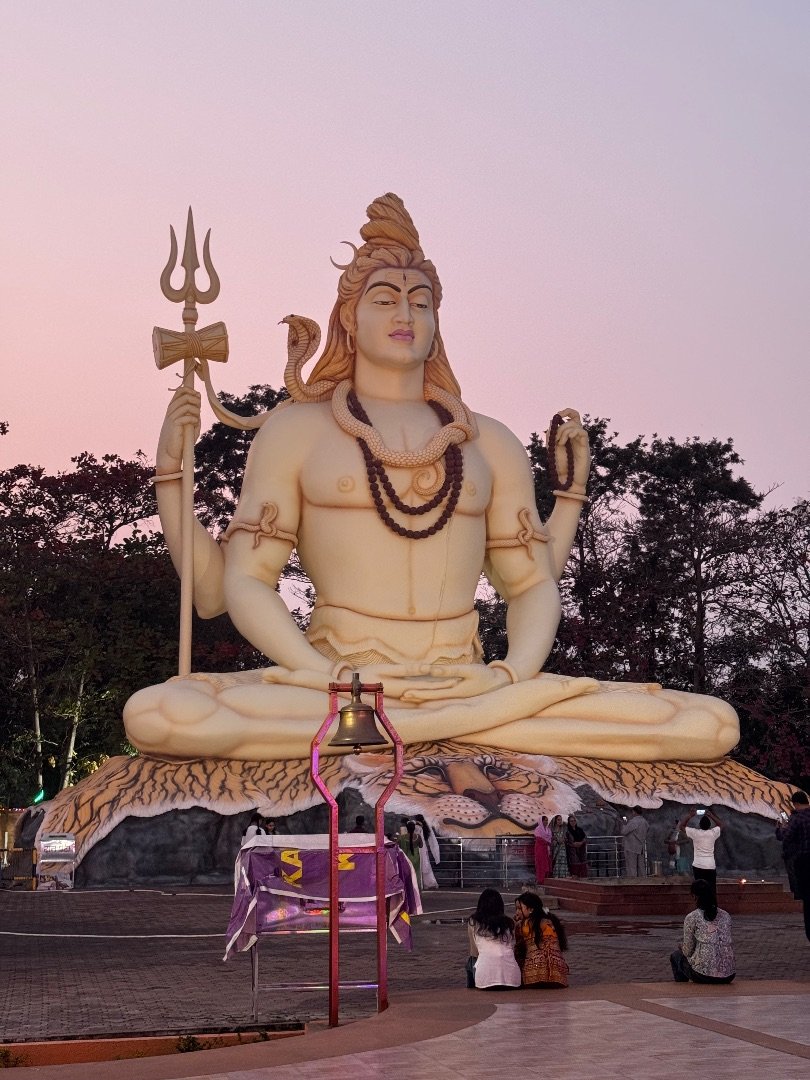
Jabalpur is often known as the gateway to Kanha National Park, which brings both national and international tourists through its airport. Beyond Bhedaghat, it may not boast a long list of “famous” tourist attractions, and perhaps that is its quiet strength. Tourism here is largely local, allowing the city to retain its rhythm and character.
The city is neither overwhelmingly crowded nor lacking in infrastructure. Having now seen many metros and smaller towns, Jabalpur felt surprisingly balanced. The traffic is manageable, the streets relatively clean, and commercial amenities are abundant. Brand outlets and large-format stores are present often larger than those in metro cities, perhaps due to lower rental costs.
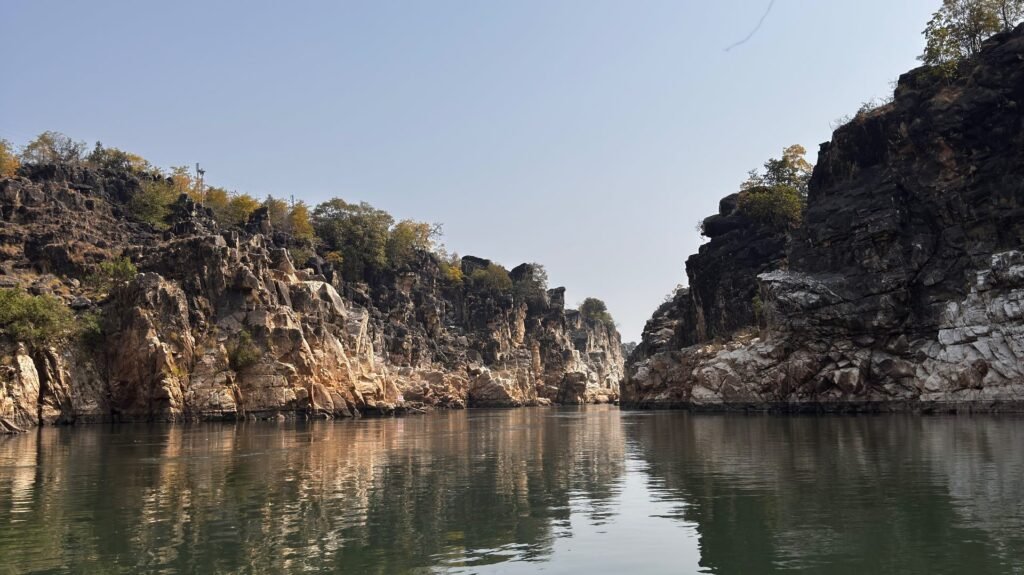
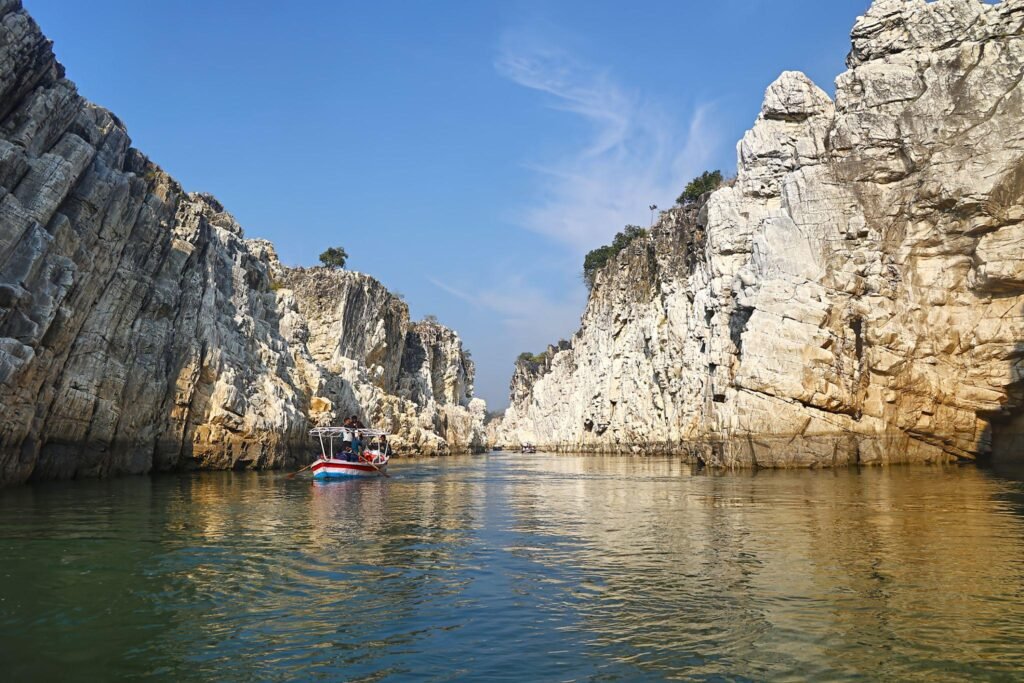
Jabalpur rests along the sacred Narmada River, frequently counted among the cleanest rivers in India. Visiting Bhedaghat for the nth time still left me awestruck. The Nauka Vihar through the marble gorge, where the boat glides between towering white rock formations feels almost surreal. The marble craftsmanship available at modest prices was another pleasant surprise which I never noticed before.
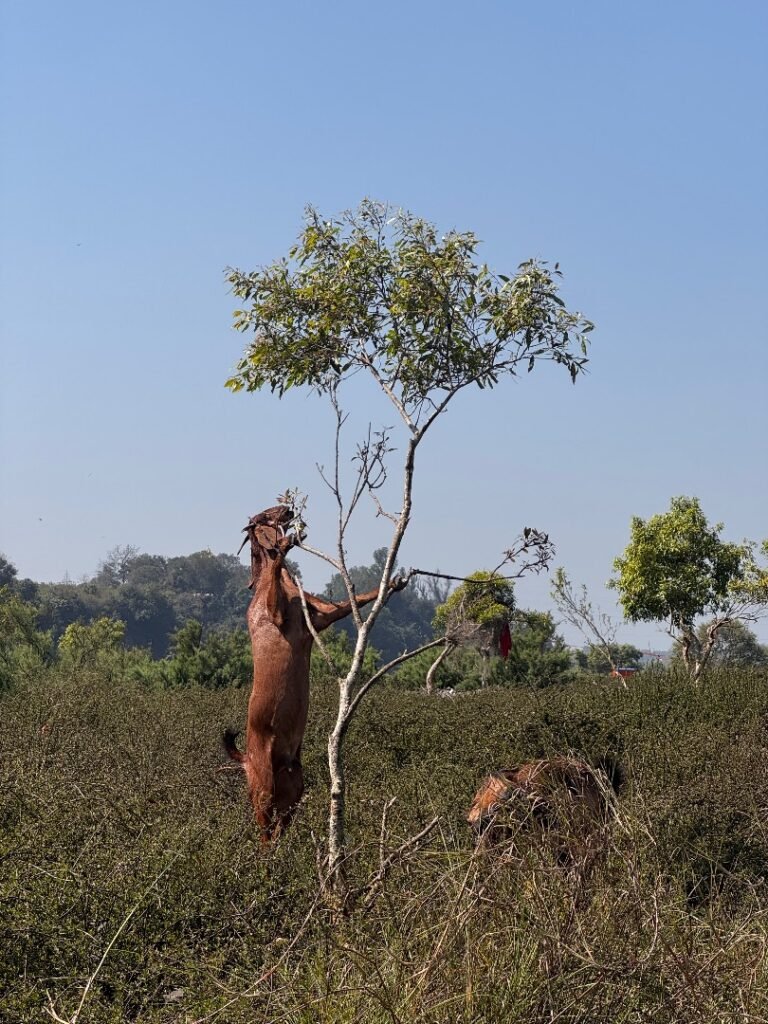
One of my favourite college-era spots, Jilheri Ghat, remains an uncrowded gem. The boat ride to the small island in the middle of the Narmada brought back a wave of nostalgia. The island, filled with stones, trees, grazing goats, and a few quiet devotees isn’t conventionally touristy, but it radiates peace. Some places don’t need grandeur, they offer serenity.
The Food
I believe food defines travel. A place no matter how beautiful, feels incomplete if it doesn’t have good cuisine. Good food is non-negotiable.
Living in Jabalpur during college, I never viewed its food from an outsider’s perspective. The lanes of Ghantaghar serve a Nihari that in my experience, rivals, perhaps even surpasses that of Lucknow. After visiting Lucknow, I never imagined I would hand the Nihari crown elsewhere, but Jabalpur might just deserve it.

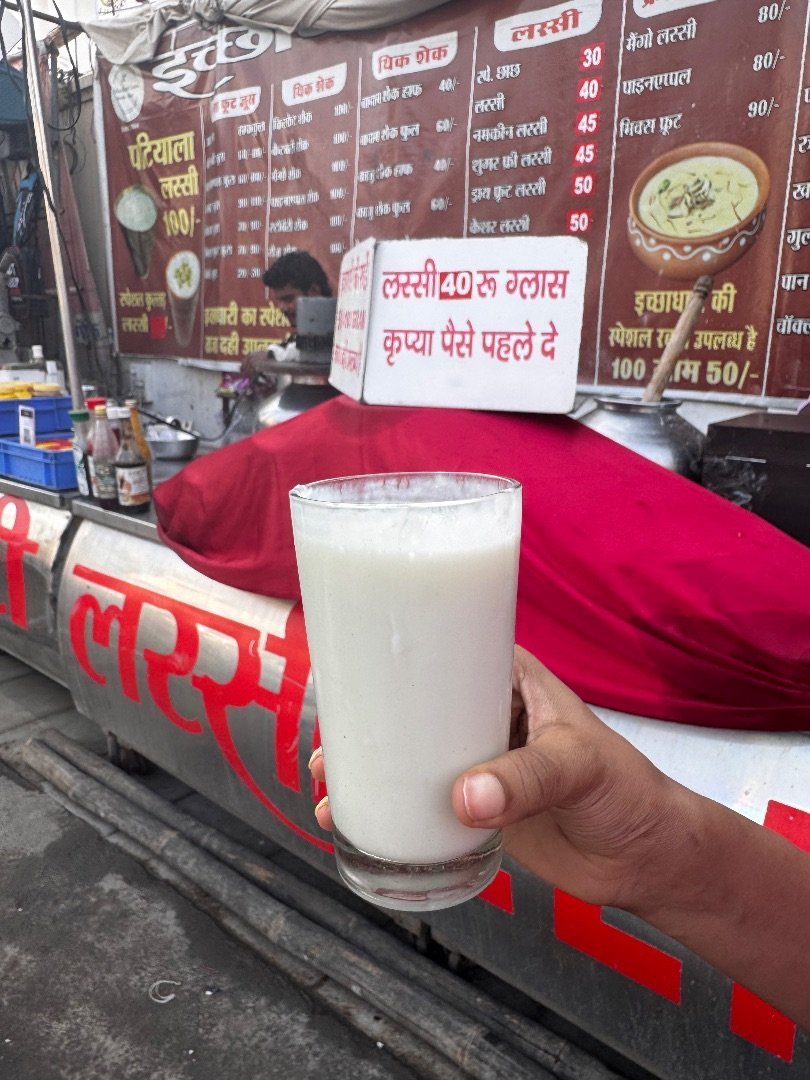
The bakeries are impressive and remarkably inexpensive. The Lassi at Icchadhari Lassi is exceptional, and the Rabri which you will find in jabalpur stands confidently beside what you’d find in Mathura. Revisiting these flavours made me realise how fortunate I had been during my college days. Perhaps growing up in Jabalpur quietly set a high benchmark for my expectations of food wherever I travel.
The People
The warmth of the people stood out. A scooter rental owner trusted us without asking for ID proof, an experience rare in most cities today. Government managed parking areas were orderly and efficient. You’ll rarely see side mirrors on bikes here, likely because people don’t tend to overspeed. There was patience in the flow of traffic
Despite having heard of crimes during my college years, from an outsider’s perspective, the city felt safe and unthreatening.
One limitation however, is the limited presence of ride hailing services like Ola and Uber, particularly at night. Even when cabs were available, drivers sometimes asked for additional payment beyond the app fare. At times it felt understandable, especially for destinations outside city limits where return rides are uncertain, but it remains an inconvenience.
Conclusion — Then and Now
Jabalpur remains largely the same in its essence; Steady, grounded, unpretentious. But I have changed. I carry more exposure, broader experiences, and a different lens through which I see the world.
This visit wasn’t merely about returning to an old city. It was about rediscovering it as a changed person. And strangely, I found myself liking it even more than I did when I lived there.
I appreciated it more. I understood it more. And I felt prouder than ever to have spent my college years in Jabalpur.