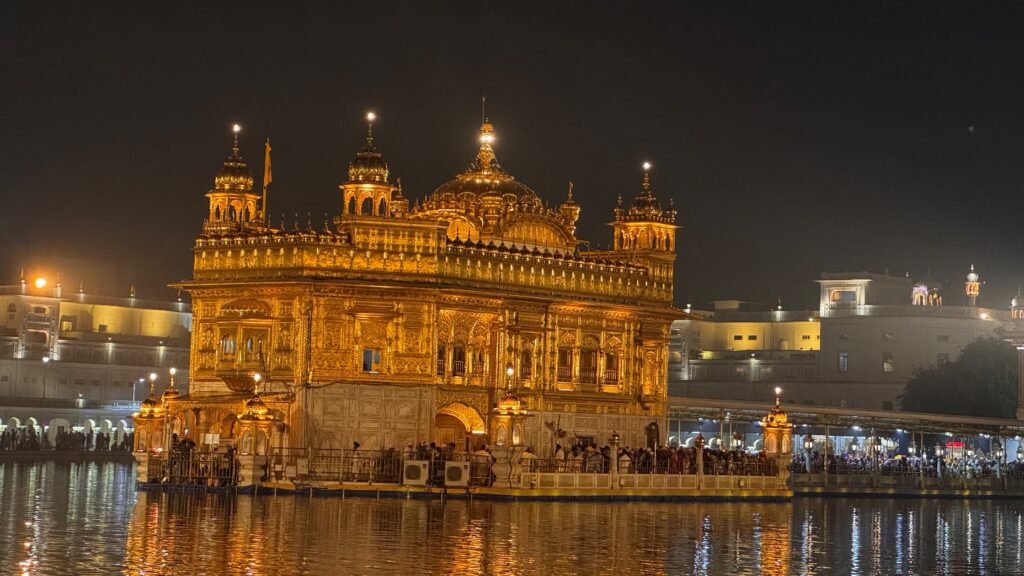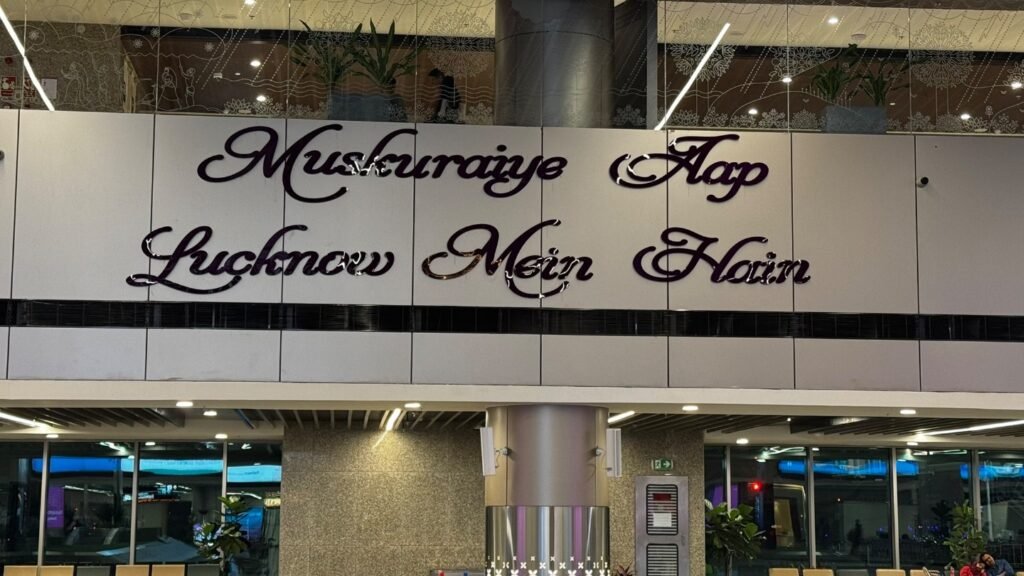
Lucknow has always been one of those places people visit purely for the food, and I was no exception. So many times I came up with the idea of traveling there just to eat. This year, I finally planned a trip with a single agenda: to experience everything Lucknow has to offer on a plate. Coincidentally, around the same time UNESCO also recognised Lucknow as a Creative City of Gastronomy, which felt like the perfect time to travel to Lucknow.
Planning the trip largely revolved around food. The city’s iconic eateries are scattered all over the internet, so deciding where to eat was the easiest part. However, finding accommodation was trickier. Good stay options are limited in the bustling heart of the city – Hazratganj. And the Hazratganj area tends to be perpetually crowded. We eventually chose Novotel Gomti Nagar, located in Gomti Nagar, the newer and better planned face of Lucknow.
Day 1 at Lucknow
Our flight landed around 1 p.m., and checking into the hotel before lunch felt impractical. So we decided to go straight to our first stop, Idrees Biryani. Idrees is probably the most famous place for biryani in Lucknow, and its popularity is evident the moment you arrive.
We were greeted by a long queue, which to our surprise was only for takeaway. After enquiring, we were told there’s a small seating area at the back where one can sit and eat. However, it was completely full, with people hovering around seated diners waiting for their turn. We joined the queue for seating, and about 20 minutes later, we finally managed to get a place.
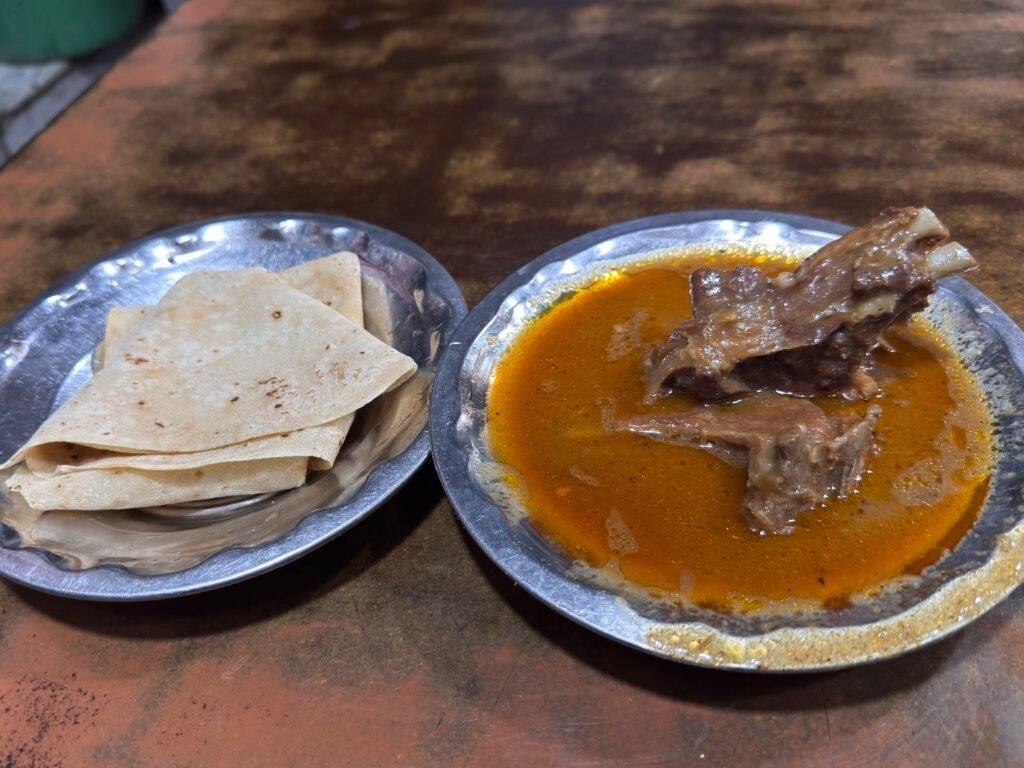
By then, we had already decided what to order. We went with mutton korma, mutton stew, mutton biryani, sheermal, and rumali roti. Everything arrived within five minutes.
The mutton, across all the dishes, felt fresh and succulent. Both the mutton korma and the mutton stew were cooked to perfection. The rumali roti paired beautifully with the gravies, while the sheermal though flavorful, felt a bit heavy.
The mutton biryani was essentially a yakhni pulao. Soft, fragrant rice, mildly spiced, and complemented by well cooked pieces of mutton. Every item on the table was genuinely good, and by the end of the meal, we knew one thing for certain that Lucknow was going to be very kind to our taste buds.
After lunch, we headed to the hotel and checked in. For getting around the city, we hired a scooty. Any rental vehicle in my opinion, is the best way to explore the city on your own terms. It gives you the flexibility to move at your pace and weave your way through the city without being tied to cabs or schedules.
Dinner was planned at Tunday Kababi, legendary for its galouti kebabs. One useful tip if you’re exploring Lucknow on two wheelers: always set Google Maps to the four-wheeler route. The two-wheeler option often takes you through extremely congested inner lanes, which can quickly become chaotic. To make it worse, Google Maps rarely reflects traffic accurately in Lucknow. So avoiding those narrow routes can save you a lot of time.
On reaching Tunday Kababi, we initially assumed it was only a takeaway spot as the kitchen opens straight onto the road. However, the staff directed us to park our scooty in the parking area and head inside.
What awaited us was unexpected. The sheer size of the seating area took us by surprise. Tunday Kababi has two floors, and both were completely packed with diners. Every table was occupied, with people waiting patiently around for their turn. We hovered near a table, and after about 15 minutes we finally managed to secure a spot.
At Tunday Kababi, we ordered mutton galouti kebab, black buffalo boti kebab, mutton korma, Mughlai paratha, and rumali roti. Everything arrived within about ten minutes.
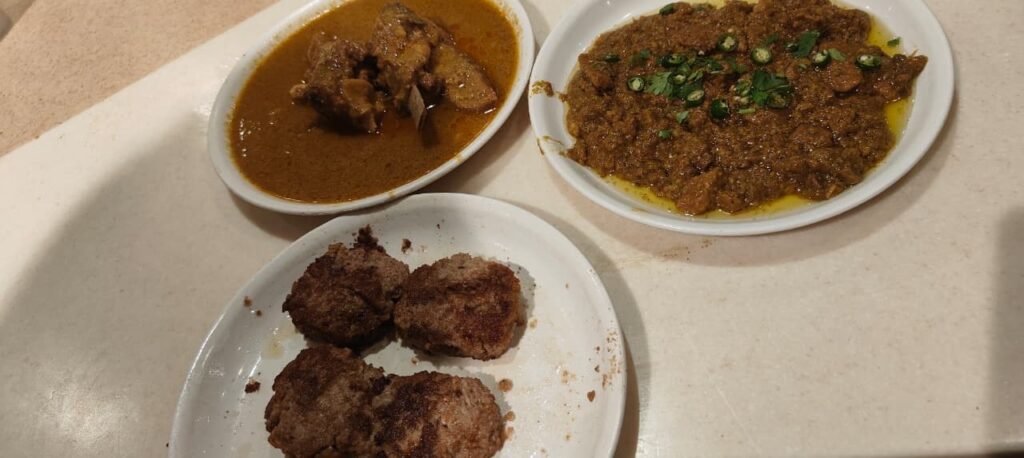
The mutton galouti kebab was exceptional, rich, deeply flavourful, and truly melt-in-the-mouth. The spices were perfectly balanced making it (quite honestly) the best galouti kebab I’ve ever had. It lived up to its legendary status in every sense. The mutton korma too stood out as one of the best I’ve tasted.
I feel one of the reasons behind the quality of the food in Lucknow is the use of fresh mutton. Non-veg consumption is extremely high in Lucknow and as a result, most established eateries rely on daily, fresh stock rather than frozen meat. I could taste the texture and flavour in every bite that only comes with fresh meat.
The black buffalo boti kebab was good, but when placed alongside these standout dishes, it inevitably felt overshadowed. It had a keema-like texture and paired well with the rumali roti, but lacked the depth and flavours of the galouti and korma. We later also ordered the black buffalo galouti kebab, which unfortunately fell short of its mutton counterpart. The richness from meat was missing, and the spices didn’t feel as harmoniously balanced.
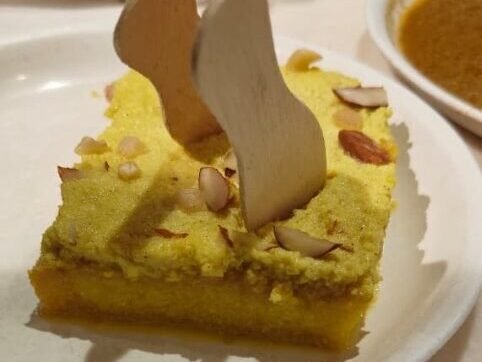
For dessert we ordered shahi tukda. I was not expecting much from desserts but surprisingly, it turned out to be one of the best versions I’ve had. It wasn’t overly sweet or oily, as is often the case. Instead, it had a delicate melt-in-the-mouth texture with just the right amount of sweetness and richness.
After Tunday Kababi, we decided to take a leisurely stroll to see what else Lucknow had to offer. Right in front of the restaurant, roadside vendors were selling desserts, and we couldn’t resist stopping for some malai rabri.
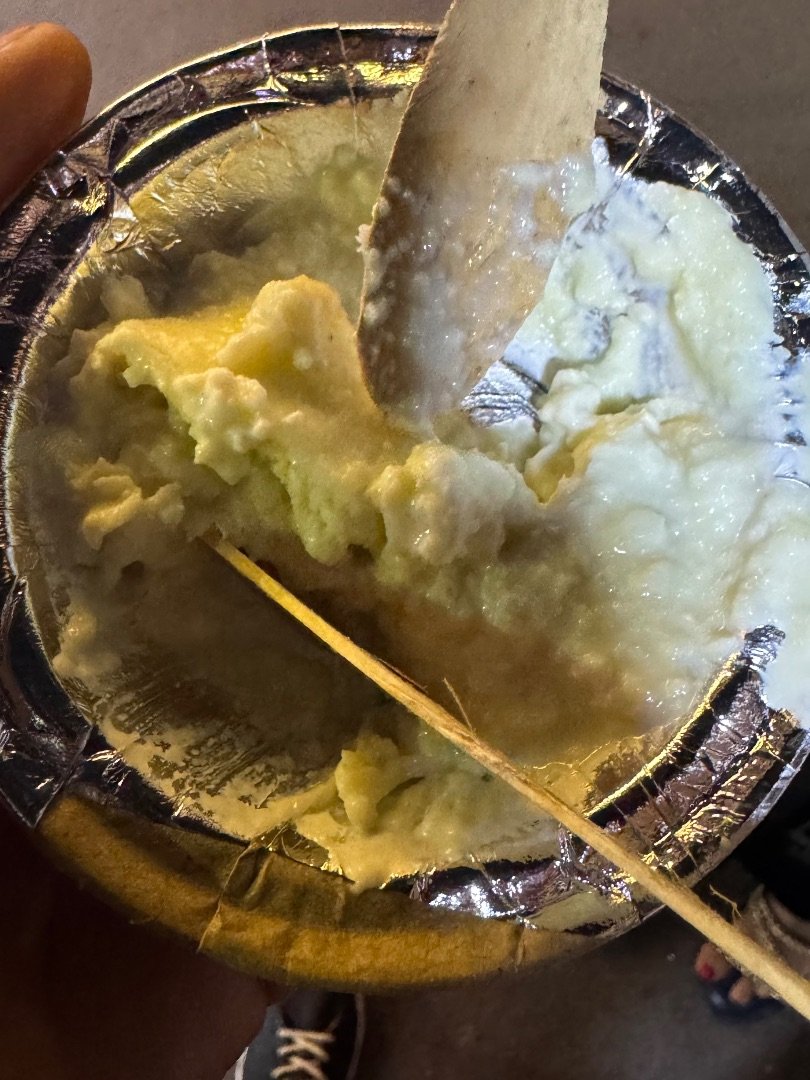
The malai rabri turned out to be quite good. The malai was fresh, and the rabri was perfectly sweetened. It ended up being one of the best roadside dessert experiences I’ve had in a long time. After this, we went on the hunt for kali gajar ka halwa and found a vendor on another street.
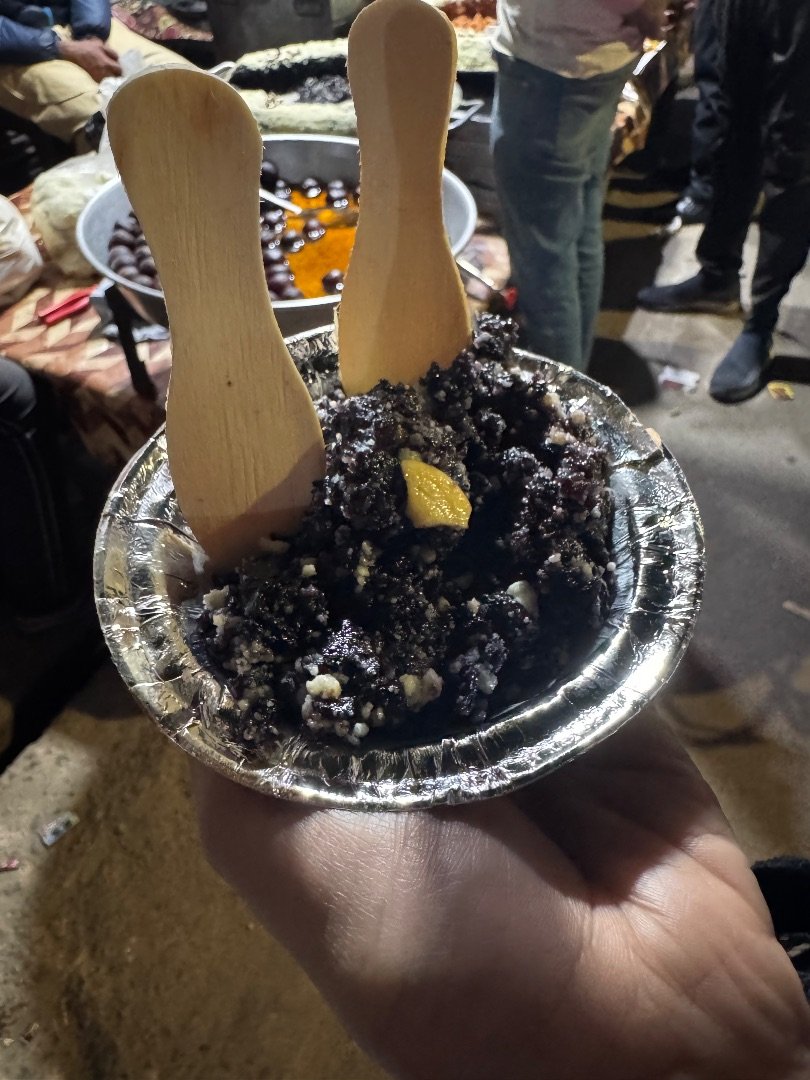
We had never tried kali gajar ka halwa before and didn’t know what to expect. The halwa was good, though slightly sweeter than our preference. While I’ve never tasted raw kali gajar, the halwa suggested a mildly astringent flavour profile. Personally, I still prefer the familiarity of laal gajar ka halwa, but trying the kali gajar version was an interesting experience in itself.
Day 2
Day two began with breakfast at the hotel. The spread was quite good, but what really surprised us was the presence of mutton nihari in breakfast. After all, this was clearly going to be a nihari day.
For lunch, we planned to try kulcha and nihari at two of the most famous spots, Raheem’s and Mubeen’s.
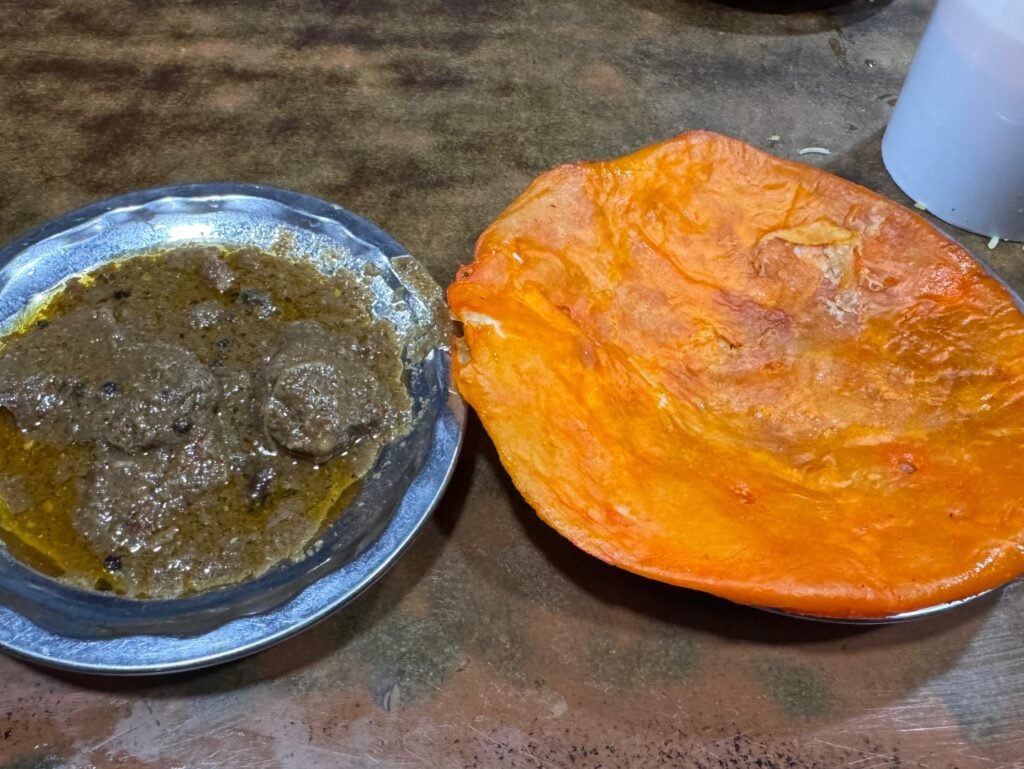
We started with Mubeen’s, where we ordered kulcha with paya nihari and mutton nihari.
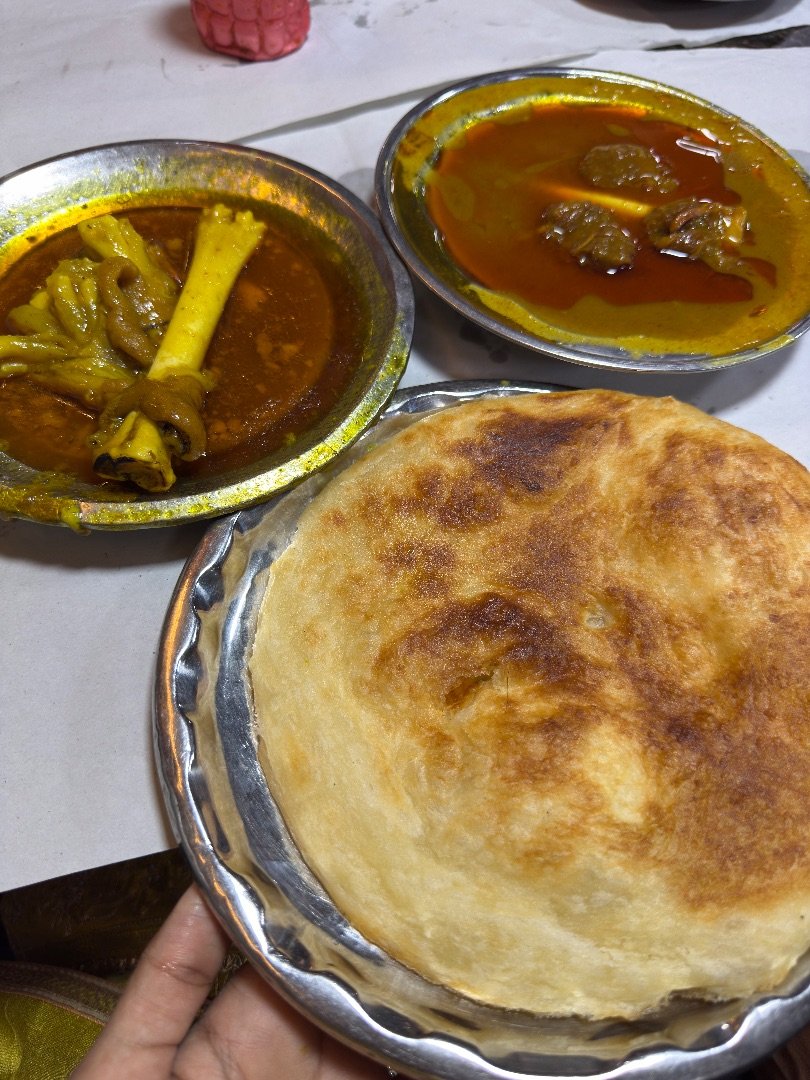
Having eaten nihari at countless places, I can safely say I’m a serious nihari fan; and this was easily one of the best I’ve ever had, if not the best. The mutton was exceptionally tender, almost melting in the mouth, and the spices were beautifully balanced without being overpowering. The only thing I slightly missed was the usual garnishing, finely chopped green chillies and garlic which adds freshness to Nihari. That said, the freshness of the mutton made up for it, so I wouldn’t really count this as a shortfall.
The paya nihari was a first for us. Paya has a distinctly fatty gelatinous texture, which may not be to everyone’s liking. We couldn’t finish the entire plate because of how rich and heavy it was, but in terms of cooking and flavour, it was done very well. Overall, it was a memorable experience.
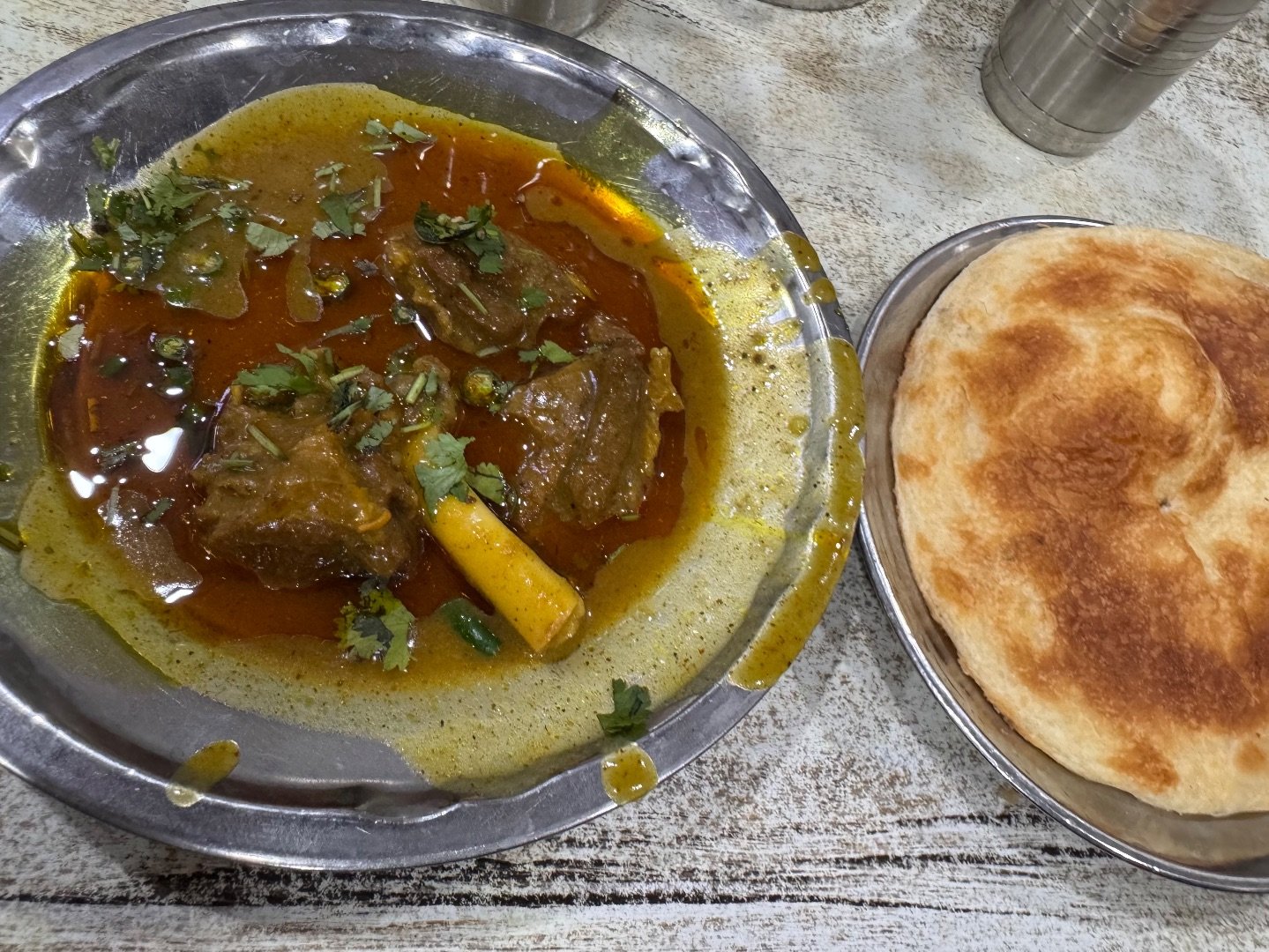
After Mubeen’s, we headed to Raheem’s which is located right next to it. We repeated the same order without paya nihari and it gave us the perfect chance to compare the two, and perhaps even answer where the best nihari in India might be found.
Our order arrived in about ten minutes. Raheem’s mutton nihari was excellent by most standards, rich and well-spiced. The spices were well balanced, and it was easily better than the majority of niharis I’ve had in my life. However, when compared directly with Mubeen’s, it fell slightly short. The mutton lacked that melt-in-the-mouth tenderness, we could feel the fibres while chewing. Still, taken on its own, it was a very good bowl of nihari, just not quite as exceptional as Mubeen’s.
After lunch, we decided to take a relaxed stroll, partly for some shopping and partly to see what else Lucknow had to offer. During the walk, we came across a stall that was just setting up, which had the Instagram-famous Kashmiri noon chai. We asked how long they’d take to open and were told about 30 minutes, so we decided to circle back later to try their noon chai and kali gajar ka halwa.
A little further ahead, we spotted another shop selling noon chai called Al Madina. A quick Google search showed it was quite well known, so we decided to try there first. We ordered Khasta dipped Kashmiri noon chai with malai on top.
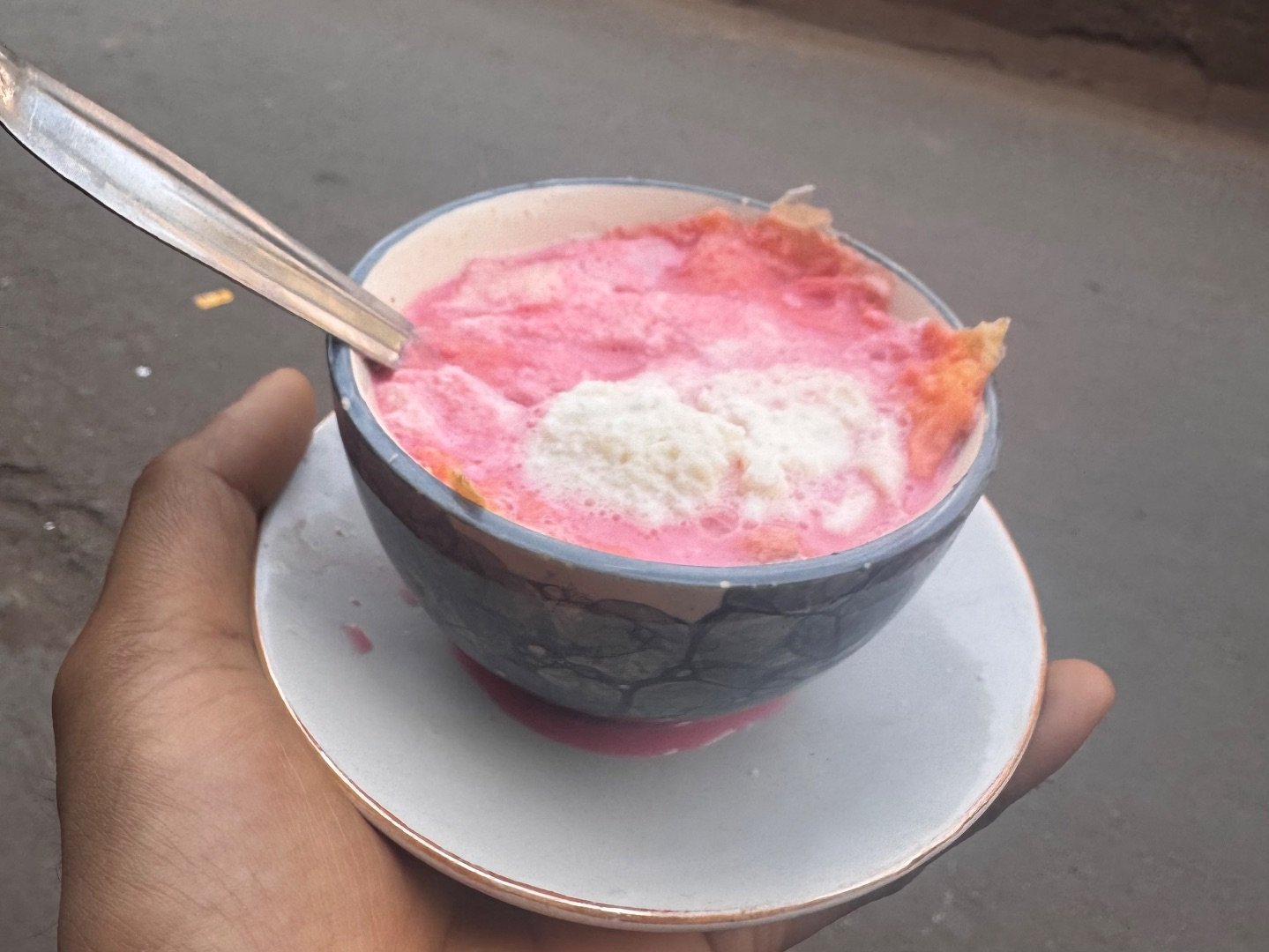
The noon chai was very good, mildly sweet and salty with the crispness of the khasta and the added richness of malai rounding it out beautifully. We had read reviews mentioning that the chai here tends to be on the sweeter side, but it didn’t quite register at the time. That only became clear later, when we returned to try noon chai from the first stall and finally understood what those reviews meant by comparison.
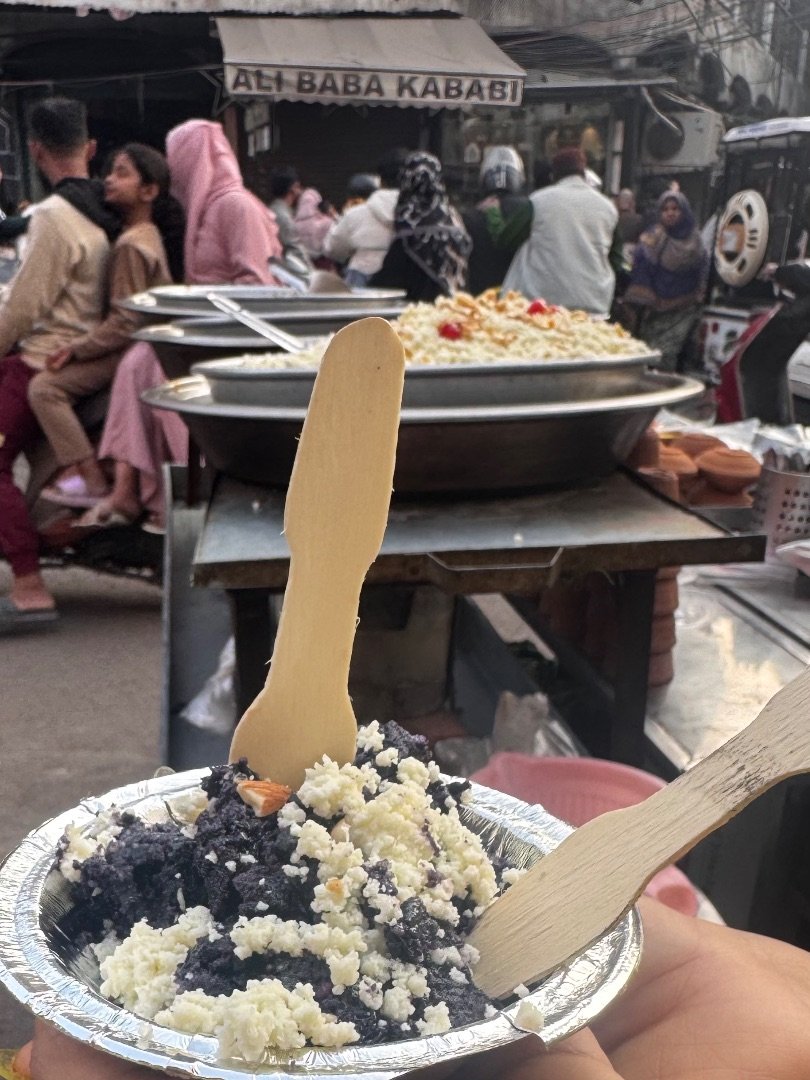
After some shopping, we returned to the stall that we had seen earlier while it was setting up. For anyone wondering about its location, this stall is right in front of Mubeen’s and is very easy to spot. Here, we ordered noon chai with malai and khasta, kali gajar ka halwa, and one more dessert that caught our attention. On enquiring, we were told it was gond ka halwa, so we decided to order that as well.
We started with the gond ka halwa, and it was a pleasant surprise. It was genuinely very good. Richness of mawa with hint of caramel and the crispy texture of gond made it a very good dessert. It was so good that, if I weren’t consciously saving space for more food, I wouldn’t have hesitated to order another plate.
The kali gajar ka halwa was also good, slightly better than the one we had tried on day one. But I would still personally choose laal gajar ka halwa over the kali gajar version. Finally came the noon chai. This time, the tea was perfectly balanced, with just the right amount of sweetness and saltiness.
After finishing the noon chai, we decided to visit Bara Imambara. Google Maps showed it was barely ten minutes away from Akbari Gate, where we were at the time. However, as mentioned earlier, Google Maps is notoriously unreliable when it comes to traffic in Lucknow. We followed the two-wheeler route, which led us straight into a completely jam-packed road. The congestion was so bad that bikes were barely crawling. It took us over an hour to cover a distance of roughly 500 metres. By the time we finally reached the Imambara, it had already closed.
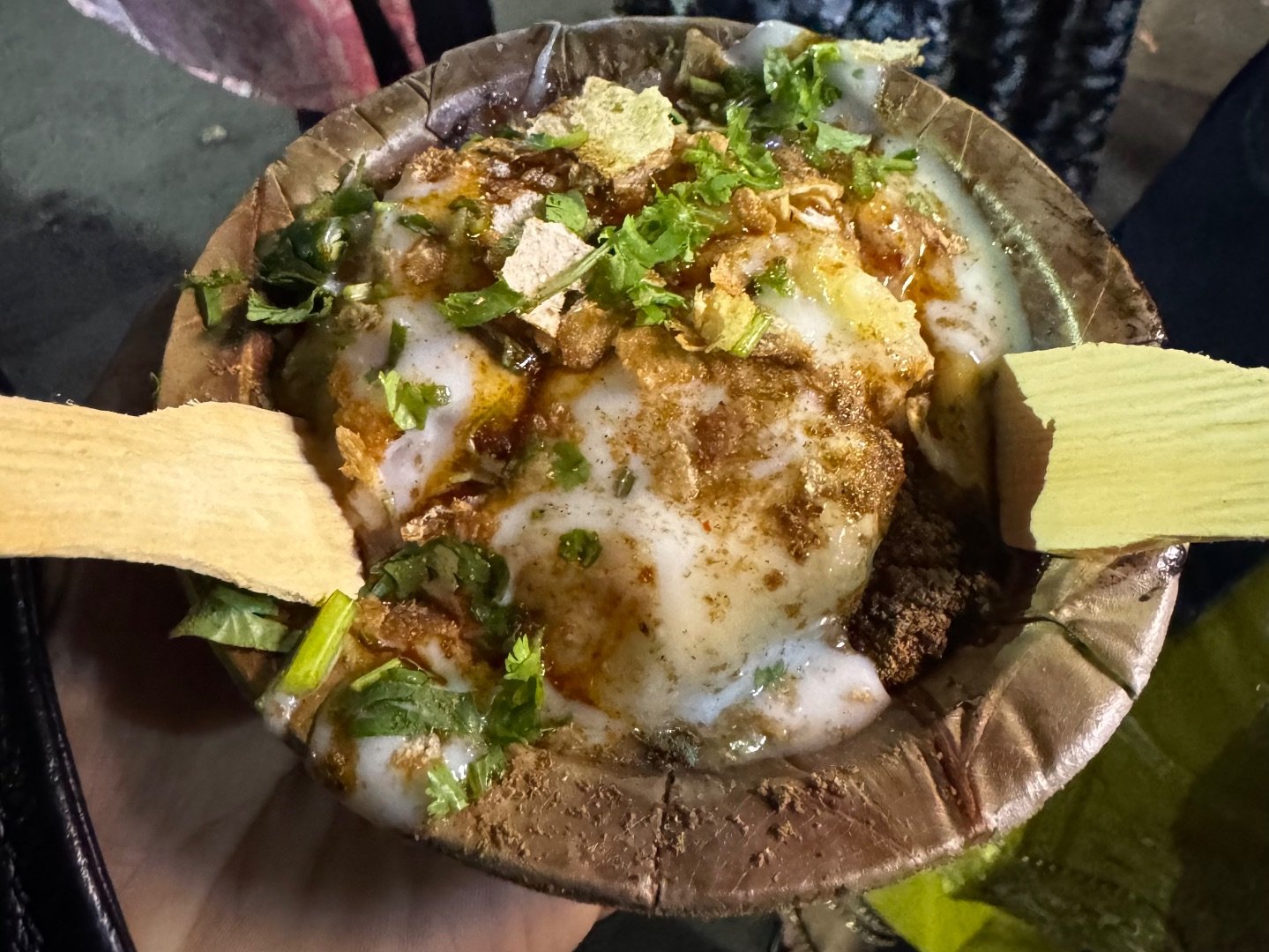
With sightseeing plans foiled, we turned back to what Lucknow does best. Our next stop was Shukla Chaat House, famous for its chaat. We ordered the aloo tikki chaat, which was quite good, well-balanced and satisfying.
From there, we went on to try the much-hyped Sharma Ji Ki Chai. Their method of making tea is quite different and was totally new to me. They keep a pot of black tea ready, and once an order comes in, milk is poured into a kulhad and topped with the hot black tea.
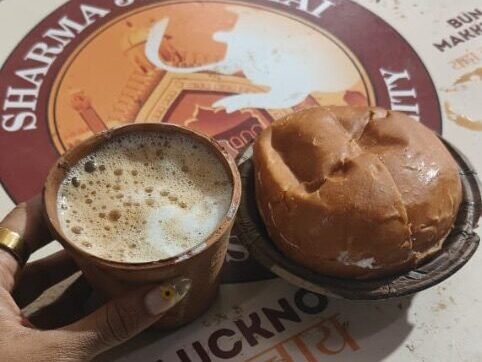
The chai was a bit of a disappointment for me. It wasn’t bad by any means, but given the amount of hype surrounding it, I was expecting something far better. It turned out to be just decent. I’ve had better tea at regular roadside stalls. Perhaps it was the expectations that made it fall short, but the experience didn’t quite live up to its reputation.
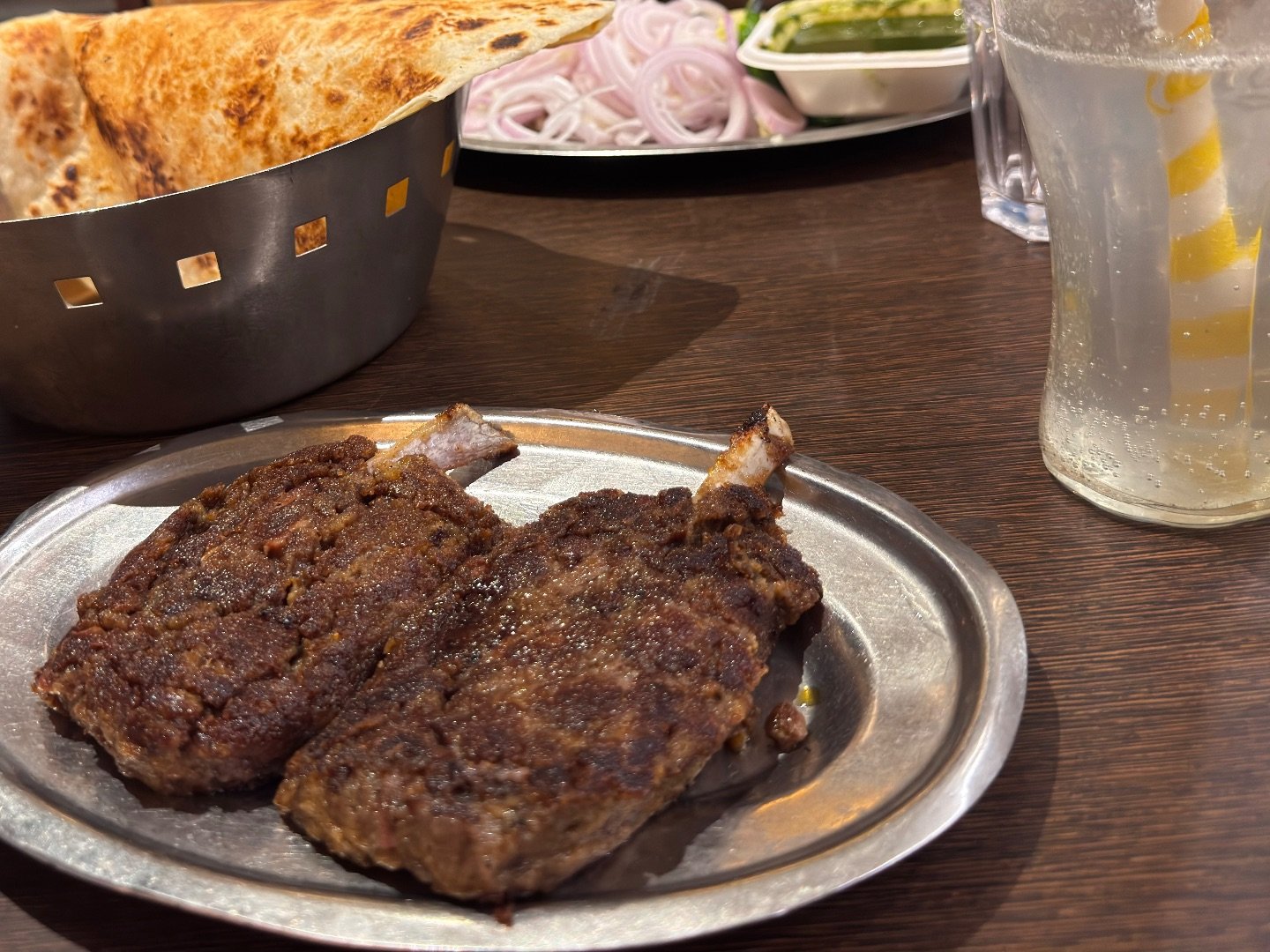
After a full day of eating, our appetite for dinner was low. So we decided to keep things light and headed to Mughal’s Dastarkhwan. We ordered just one dish, mutton chops with rumali roti.
The mutton chops were good, with a texture quite similar to galouti kebabs. However, I did find them slightly on the oily side.
Day 3
On day three, we decided to skip Hazratganj and explore lunch options in Gomti Nagar instead. There were still a few things we had on our list that we didn’t want to miss, so we decided to order them via Swiggy.
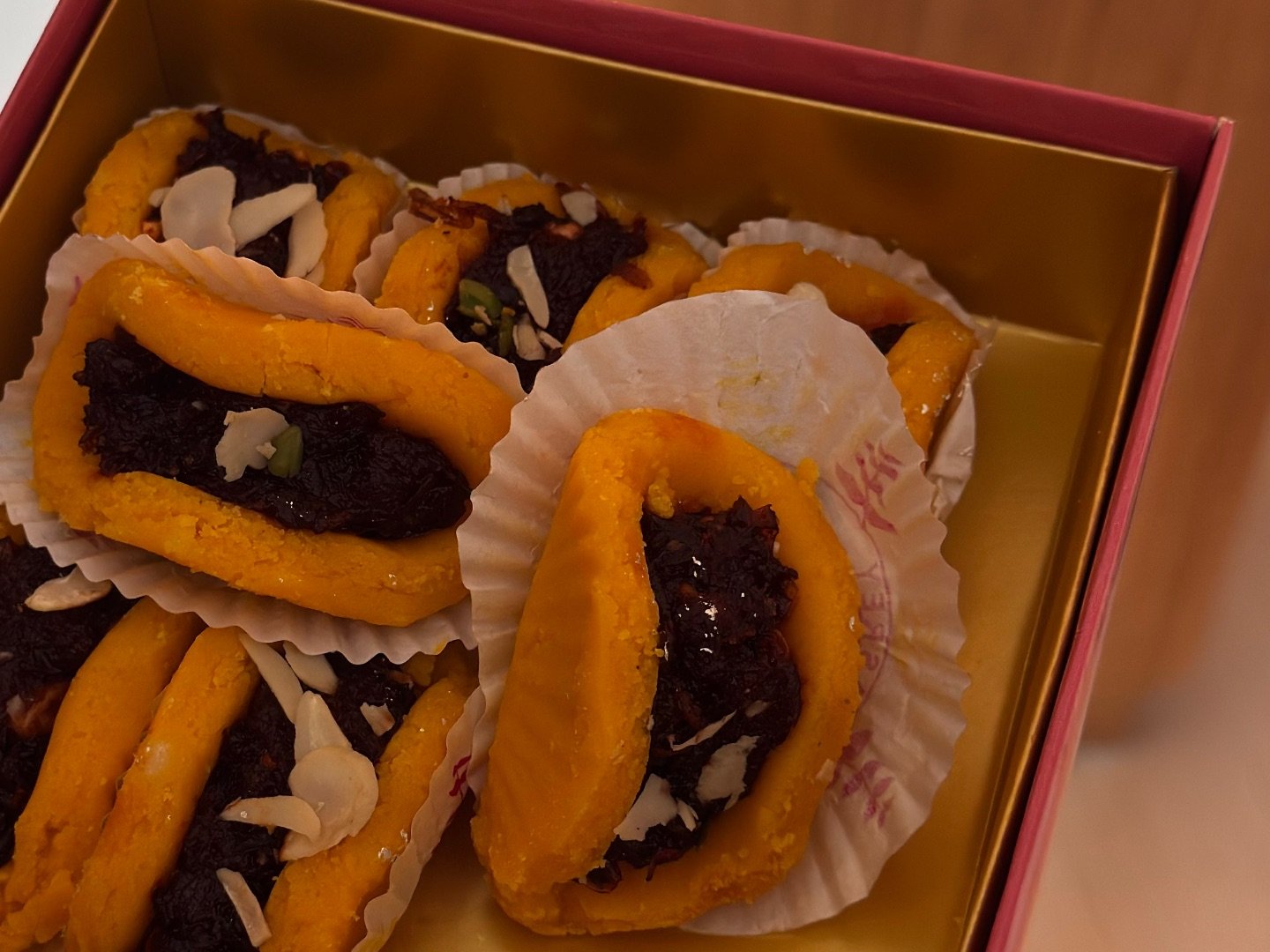
Our first order was Ram Asrey’s famous malai gilori. While placing the order, another item caught my eye, the khoya gulkand gujiya, so that went into the cart as well. The delivery took about an hour, but it was well worth the wait.
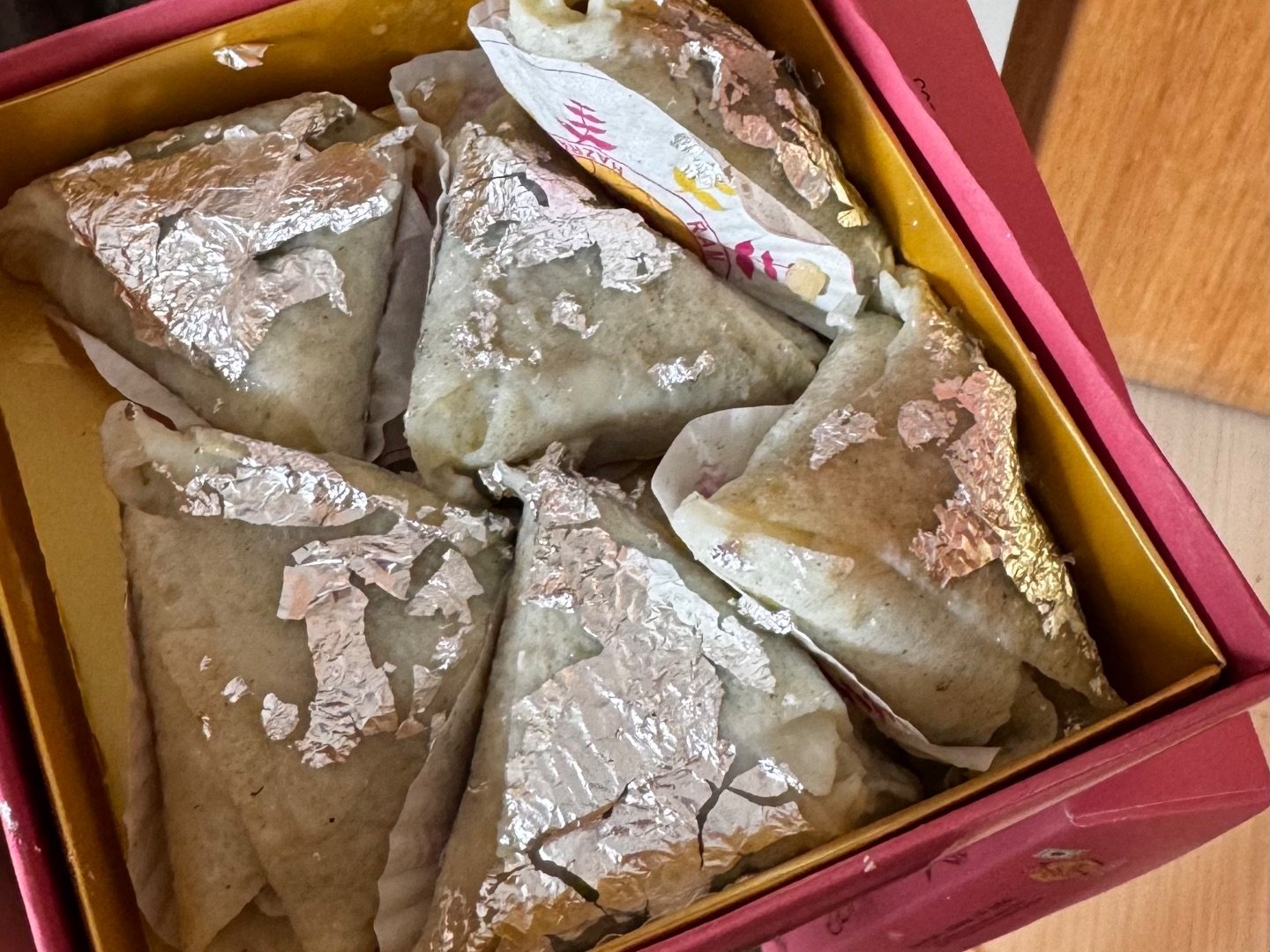
The malai gilori is truly a brilliant invention. It’s a delicate parcel of dry fruits and misri, wrapped in a thick layer of malai. The moment you take the first bite, the malai begins to melt and first releasing the crunch and sweetness of misri and dry fruits, followed by the lingering richness of malai.
The khoya gulkand gujiya was good in terms of texture and richness, but it was a bit too sweet for my taste. While the flavours were pleasant, the sweetness slightly overpowered everything else.
For lunch, we went to Kareem’s. Here we ordered keema kaleji and bheja masala. Kareem’s easily had the fanciest ambience among all the restaurants we visited in Lucknow. We even joked about how our trip had come full circle, starting with the bare-bones setting of Idrees and ending with the polished vibe of Kareem’s.
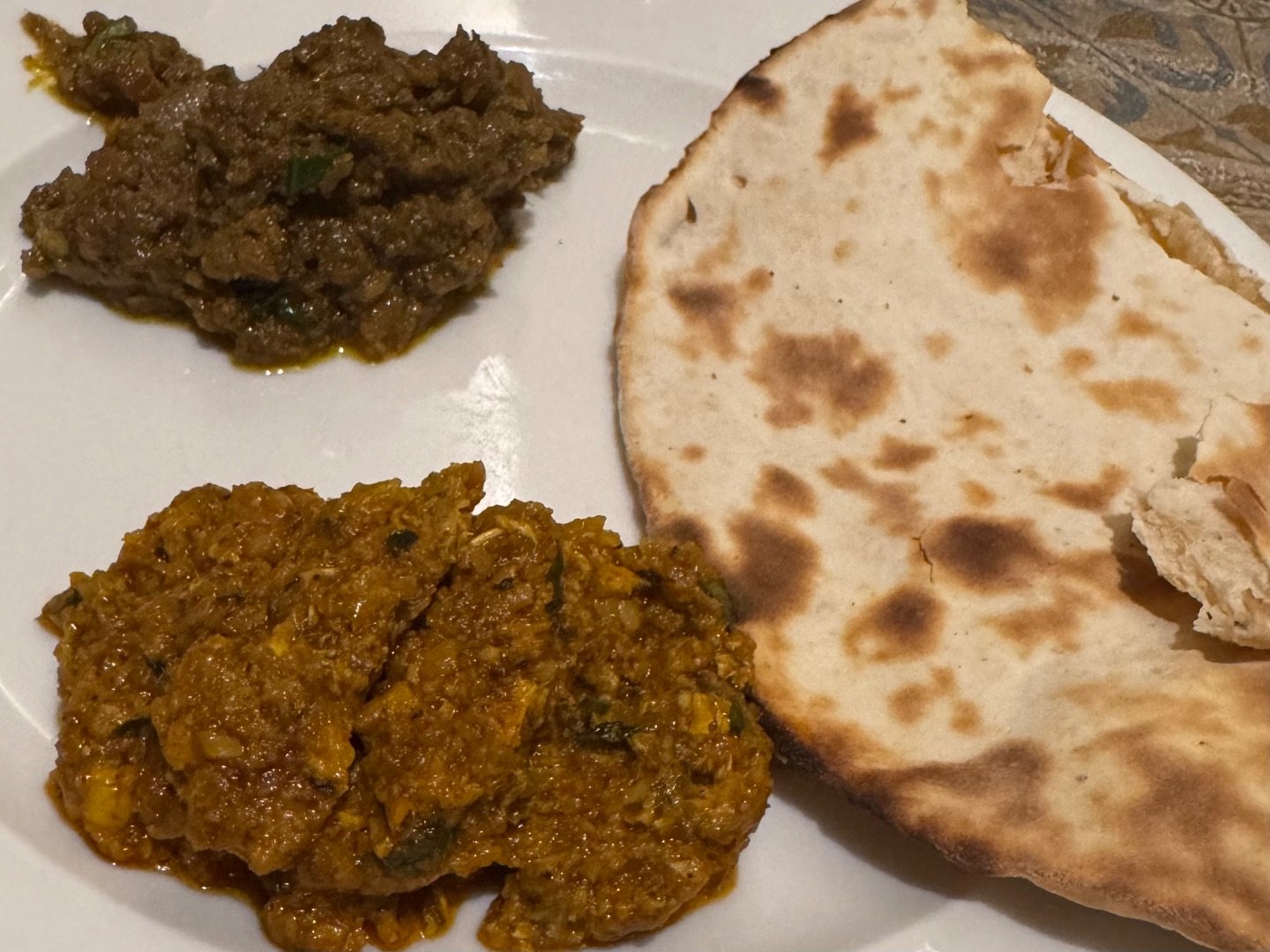
Our food arrived in about 20 minutes. The bheja masala was outstanding, easily one of the best I’ve had in my life. It was cooked to perfection, rich, and flavourful. The keema kaleji was good as well, but the bheja masala completely stole the show.
With the lunch, our trip had technically come to an end, but we still weren’t done with Lucknow’s food. We decided to go back to where it all felt most iconic and ordered galauti kebabs from Tunday once again, this time pairing them with mutton biryani. We placed the order on Swiggy, packing our final indulgence to be enjoyed during the flight journey.
Lucknow is truly a city I could revisit just for a single meal. Food is the soul of Lucknow, and the city does complete justice to it. Every dish, every shop, and every bite telling a story worth coming back for.