Jungsik
Inception
Ever since I saw Chef’s Table on Netflix, my only wish was to dine in a Michelin star restaurant. It became a bucket list dream to experience Michelin star dining at least once in my life.
Michelin stars have a rather interesting history. Michelin, the French tyre company, started publishing maps and travel guides more than a century ago to encourage people to travel more and, in turn, buy more tyres. Over time, those guides began recommending places where travellers could eat, and eventually Michelin introduced its famous star rating system for restaurants.
A single star means “a very good restaurant in its category.” Two stars mean “excellent cuisine, worth a detour.” And three stars mean “exceptional cuisine, worth a special journey.” For a rating system that started as a clever marketing idea to sell tyres, it has become one of the most prestigious honours a restaurant can receive.
Now, let’s come back to the original story.
Reservation
From the day we finalized South Korea for our vacation, I could not stop researching for Michelin star restaurants there. And South Korea has a LOT of Michelin star restaurants.
Then came the difficult part, choosing which one to visit.
The obvious choice would have been Mingles, the only three Michelin star restaurant in South Korea at the time. Unfortunately, it was completely booked for our dates, and when I emailed them, they informed me that the restaurant is fully booked and there was no possibility of accommodating us.
Then came Mosu, which previously held three stars but currently holds two after relocating. It was also fully booked for our dates.
As I continued researching, I came across a long list of names: Evett, Alla Prima, Eatanic Garden, Yeast, Kwonsooksoo, La Yeon, Onjium, and many more.
The first filter was easy. I wanted my first Michelin star experience to be local, so I ruled out restaurants that did not primarily serve Korean cuisine. Evett, for example, does serve Korean cuisine, but it is run by an Australian chef and felt a little less Korean to me.
Yeast was also a top recommendation on Reddit and had recently received its first Michelin star. The restaurant follows a chef’s counter format with only 11 seats, similar to Papa’s. However, since the cuisine is contemporary fusion rather than Korean, I had to let go of it halfheartedly.
Some restaurants, such as Kwonsooksoo, La Yeon, and Onjium, focus on traditional Korean cuisine. Many Redditors suggested that traditional Korean fine dining might not suit Indian palates because of its subtle flavours and restrained use of spices. Hence, I ruled out traditional Korean cuisine as well. Looking back now, after having visited Korea, I am not sure if I would have felt the same way. I ended up enjoying many traditional Korean dishes despite their simplicity and relatively mild seasoning.
There was one restaurant that kept coming back to my mind from the very beginning, which was Jungsik. Perhaps it was because I had seen Phil Rosenthal dine there during his visit to Korea, or perhaps because every review on CatchTable seemed to place it among the very best dining experiences in Seoul. Or maybe it was because its sister restaurant in New York, serving essentially the same cuisine, has earned three Michelin stars. Whatever the reason, Jungsik was always at the back of my mind throughout the decision making process.
After weeks of research and countless hours spent reading reviews, comparing menus, and watching videos, Jungsik was the pick.
And to make it even better, I managed to book a private room for the date we wanted. A PRIVATE ROOM IN A TWO MICHELIN STAR RESTAURANT! I don’t think my first Michelin star experience could have been any more special. It felt like the perfect setting for an occasion I had been dreaming about for years. If dining at a Michelin star restaurant was exclusive enough, having the entire experience in a private room made it feel even more distinguished.
The Dinner at Jungsik
Our private dining room was situated on the third floor. The walkway leading to it was lined with wine storage, displaying an impressive collection of bottles.
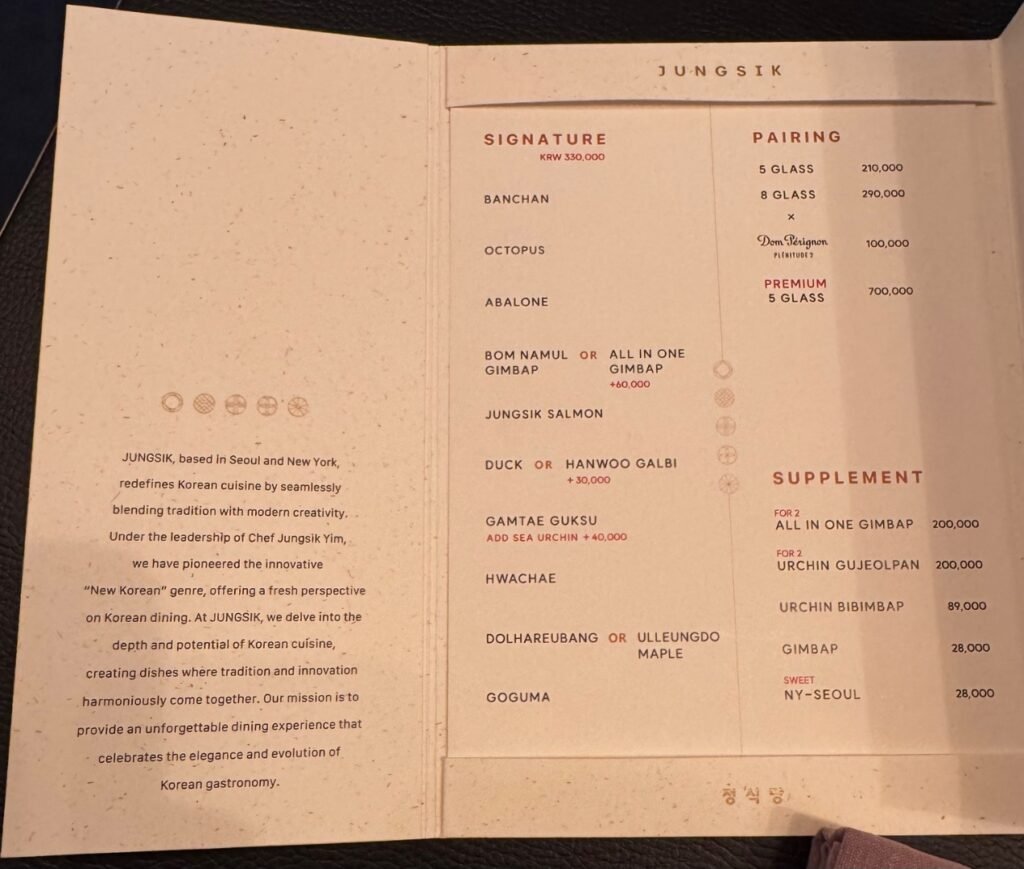
We chose their Signature Dinner Menu with a few customisations and paired it with their Five Glass pairing.
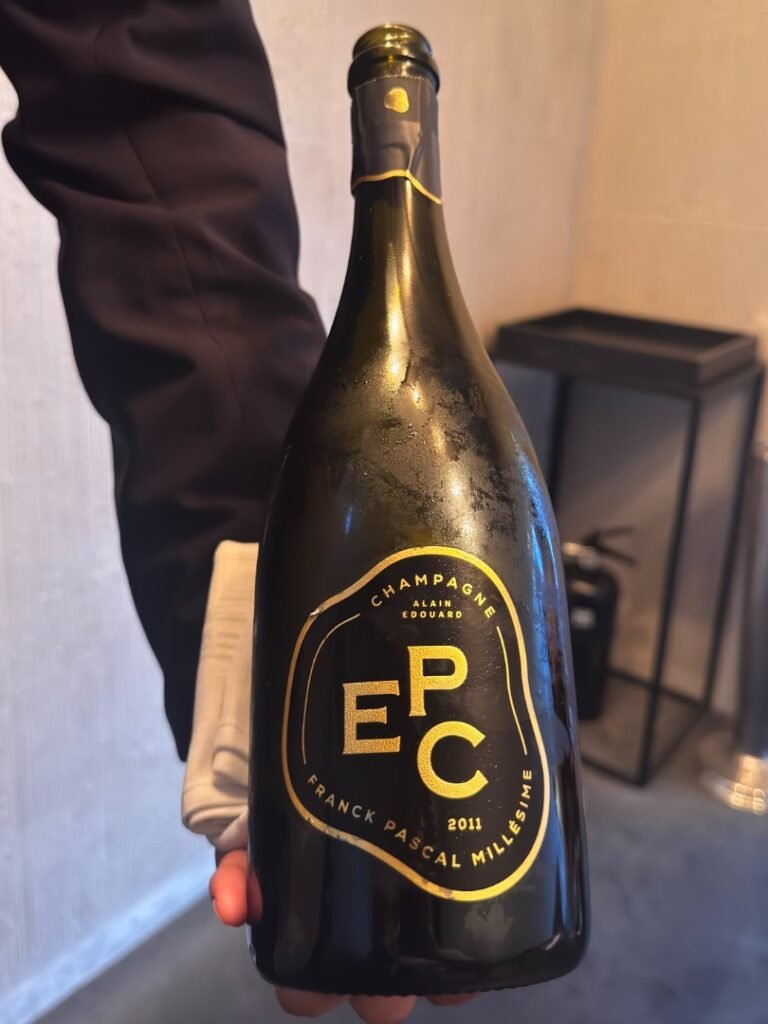
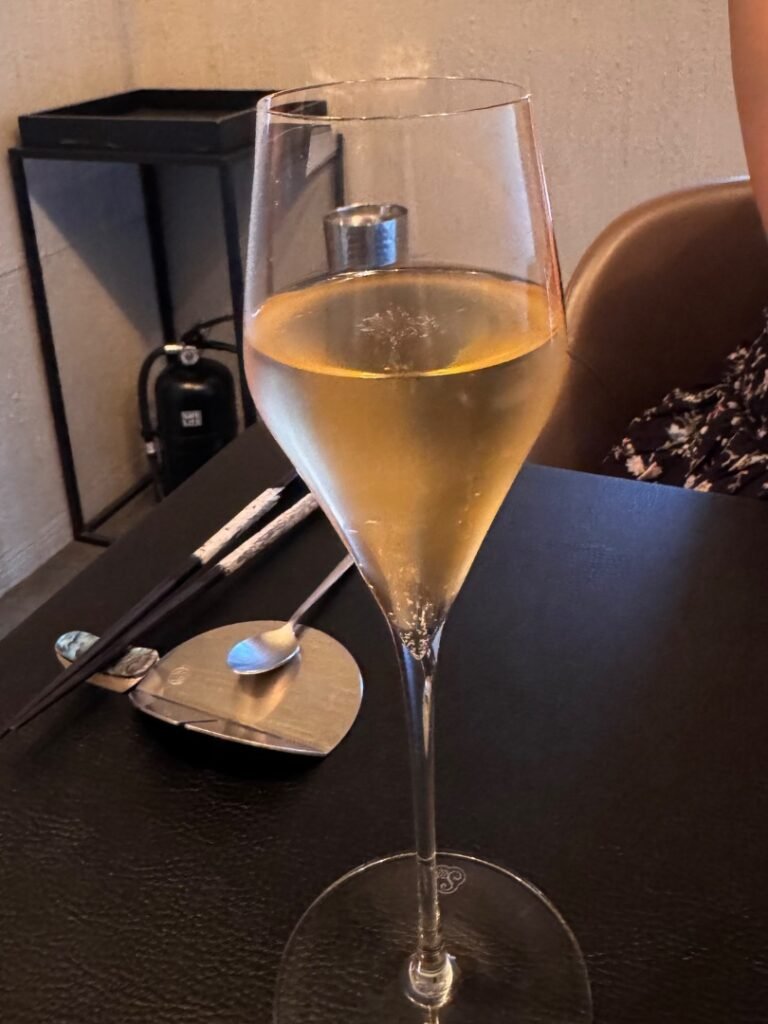
The evening began with a glass of EPC Franck Pascal Millésime 2011, a vintage Champagne aged for over a decade. Fresh and elegant, it offered notes of butter, fir tree honey, and exotic fruits. It paired beautifully with the opening banchan courses and was the perfect way to start the evening.
In Korea, the banchan refers to the side dishes served alongside a meal, but Jungsik takes it to a whole new level. Six beautifully presented bite sized dishes arrive on a wooden tray, each completely different from the other and offering a glimpse of what you are about to experience at Jungsik.
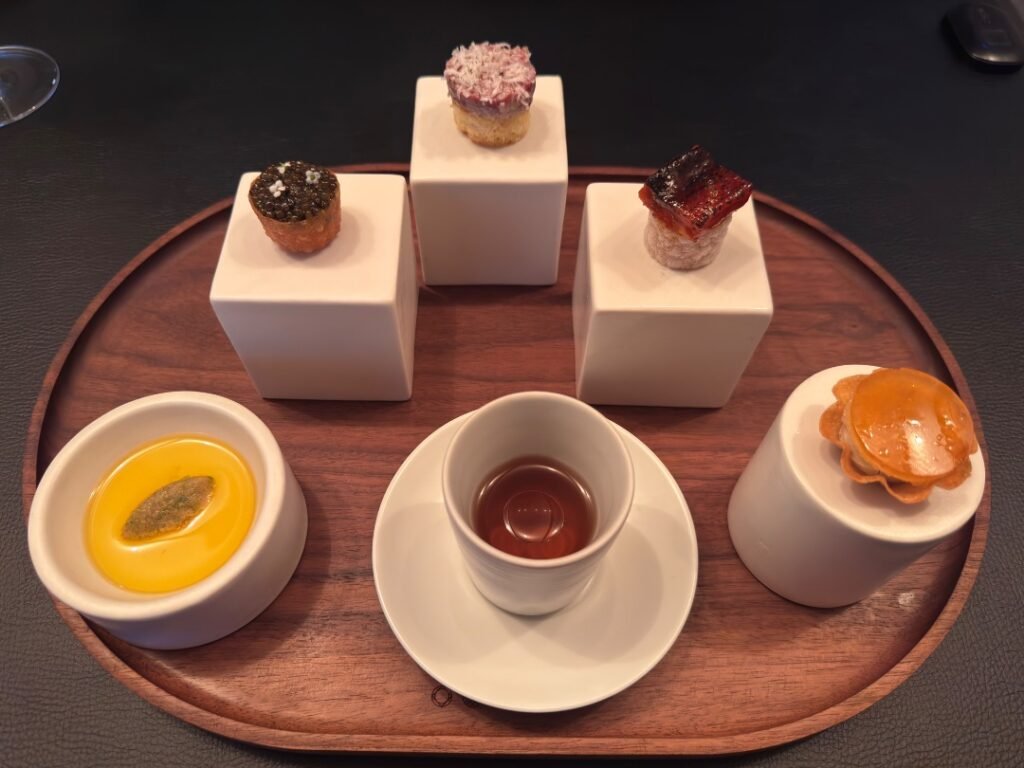
The Banchan started with an earthy, umami-rich shiitake mushroom soup, setting the stage for the flavour explosion that followed and the official inauguration of the dinner.
It was followed by handmade silky tofu with sesame oil, topped with briny poppy cod roe and a hint of the ocean from gamtae.
Next was a crisp tart filled with buttery soft salmon dressed in a mixture of white parsley salsa & cucumber kimchi and topped with kaluga caviar.
Then, a melt in the mouth Hanwoo beef tartare, seasoned with parmesan and earthy truffle, resting on crunchy brioche.
The next bite was the best eel I had in South Korea, gochujang glazed eel atop an exceptionally crisp rice cake.
Last in the banchan was a foie gras and pear tart topped with cinnamony sujeonggwa jelly.
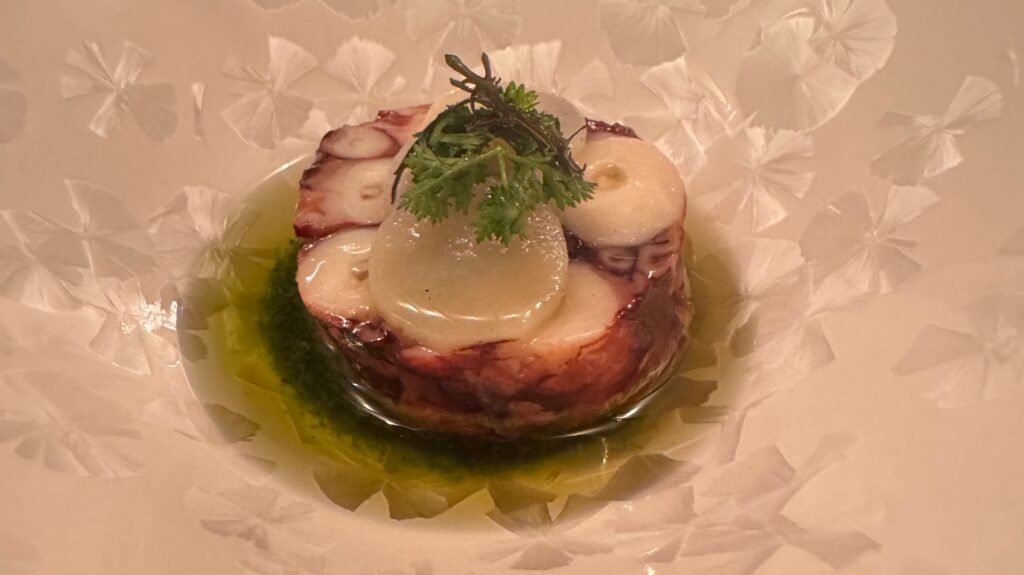
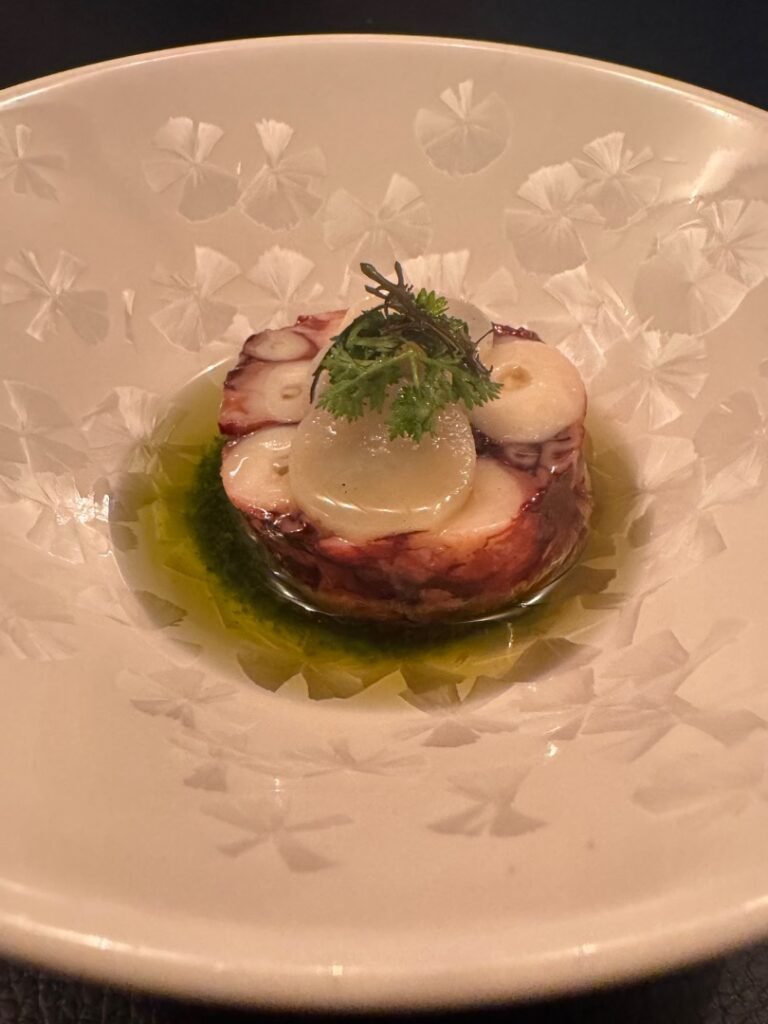
The next course was their signature buttery-soft octopus served with perfectly cooked potato slices, perilla oil, and cilantro. The octopus was incredibly tender and practically melted in the mouth, certainly the best octopus I have had in my life. The potatoes themselves were not exotic, but the way they were cooked was remarkable; just enough to tame their sharpness while retaining all of their flavour.
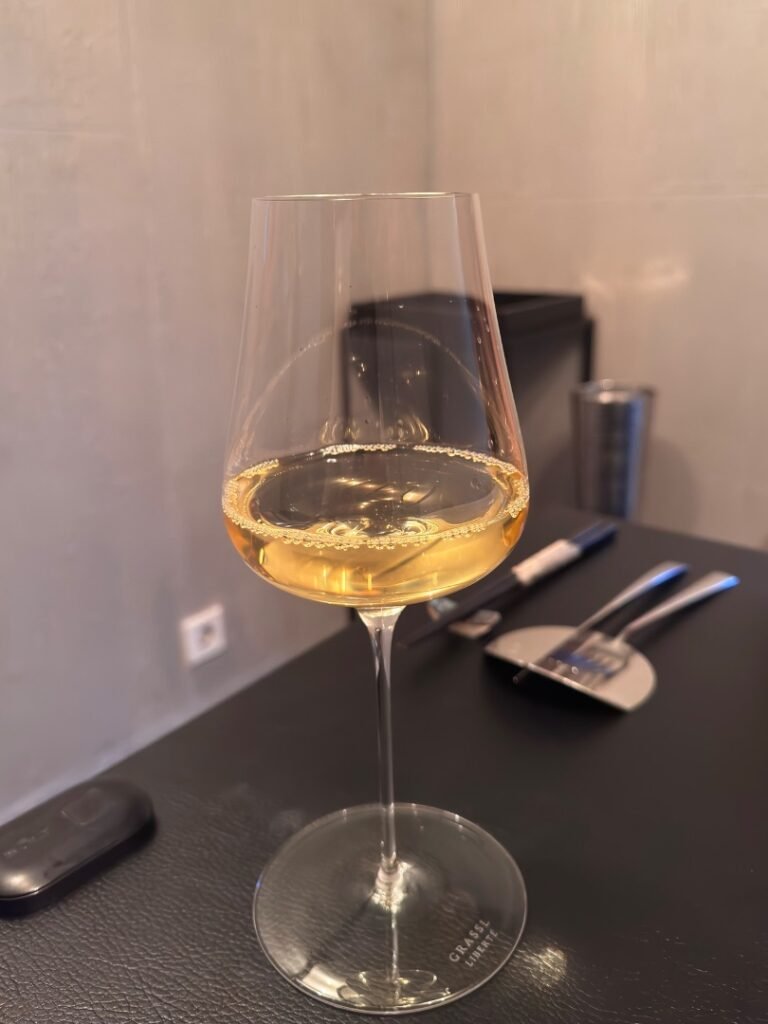
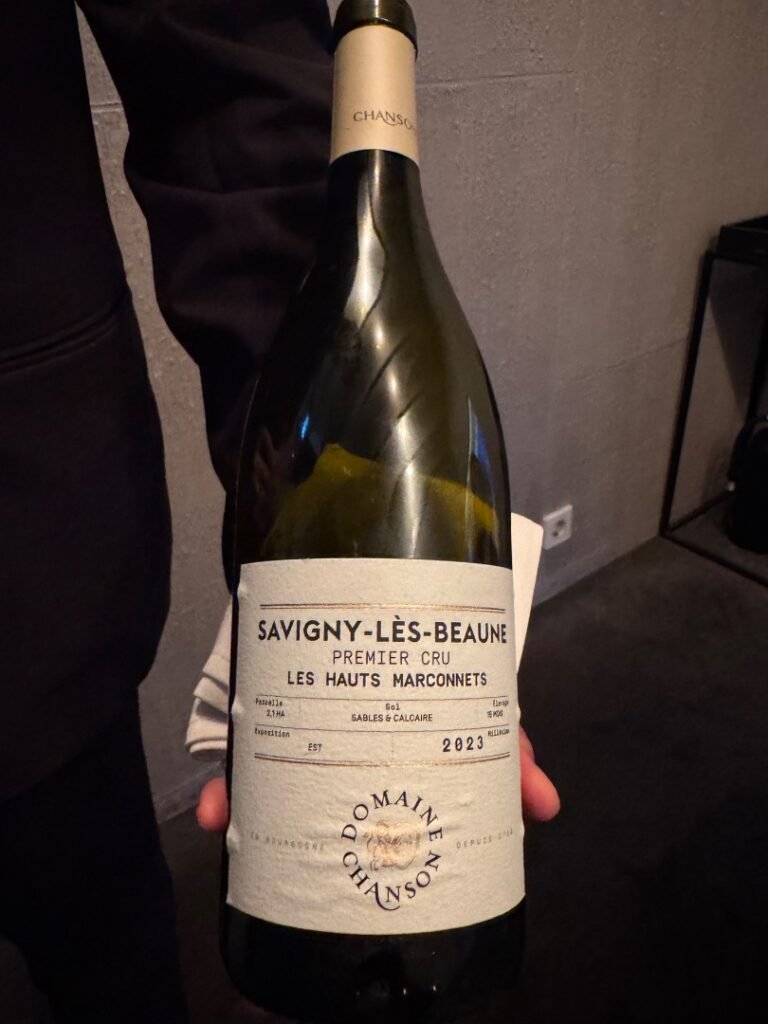
The pairing for our next course was Domaine Chanson Savigny-lès-Beaune Premier Cru Les Hauts Marconnets 2023. Golden in colour, the wine offered aromas of apple, pear, vanilla, and oak. On the palate, it was rich and creamy, with notes of ripe fruit, pineapple, subtle spice, and well-integrated oak, finishing beautifully and complementing the delicate flavours of the next course, Abalone.
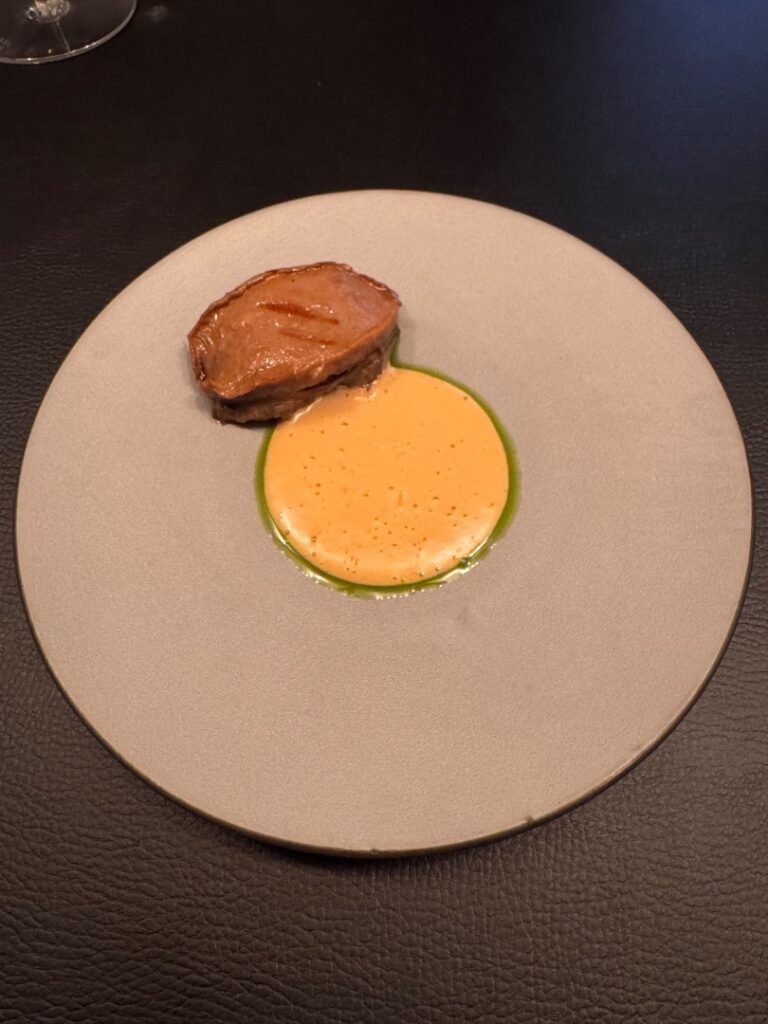
The next course was abalone, pressure-cooked for nearly two hours until it became incredibly soft and buttery. It was served over smoky kimchi and accompanied by a rich butter-based sauce encircled with fragrant perilla oil. The abalone was tender enough to yield effortlessly, while the smoky kimchi and nutty perilla oil added depth and balance to the dish.
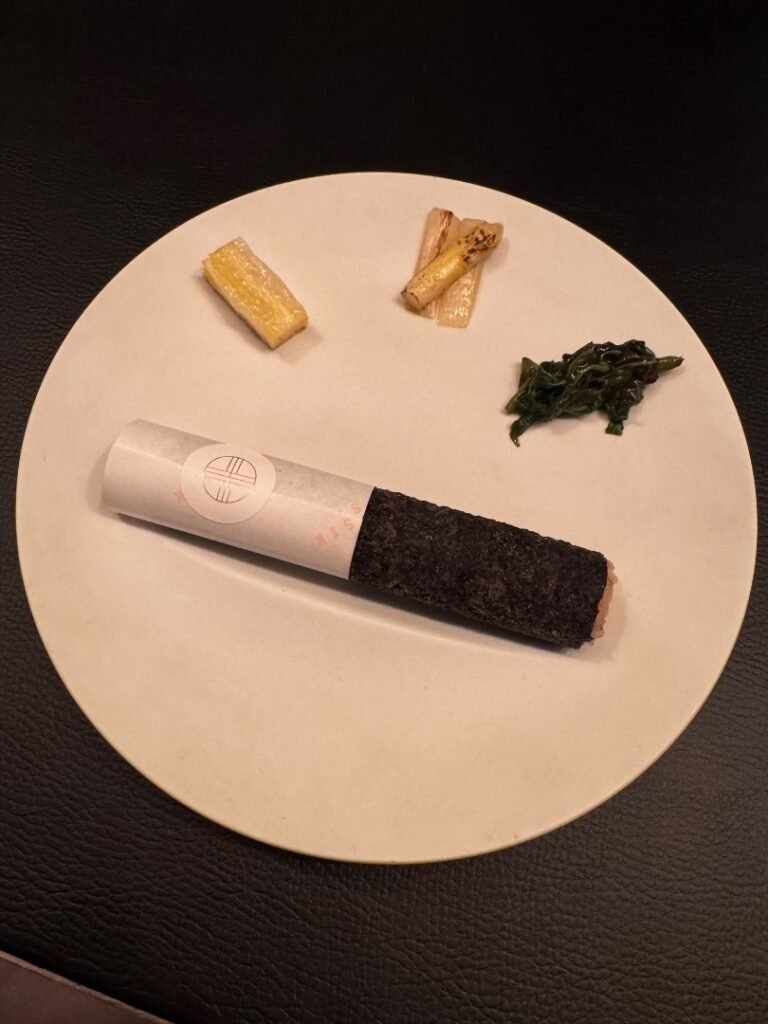
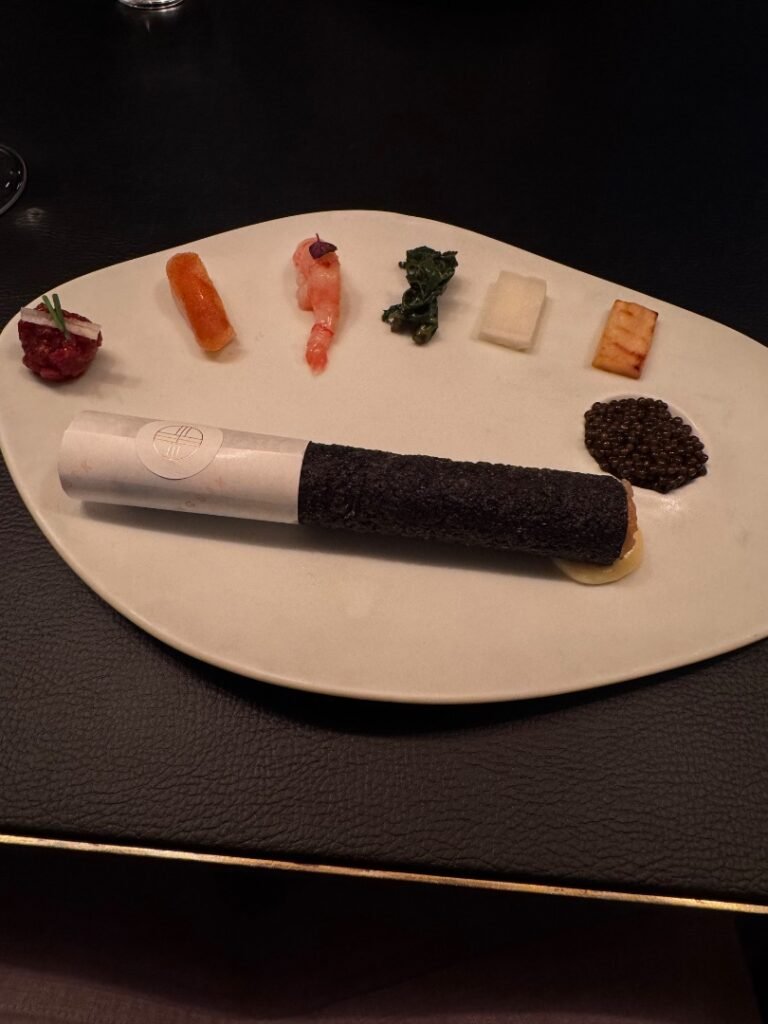
For the next course, we had a choice between Bom Namul Gimbap and All in One Gimbap. We chose one each so that we could experience both at once.
The Bom Namul Gimbap consisted of soybean paste and vinegar seasoned rice wrapped in super crispy seaweed and served with three different types of kimchi. The All in One Gimbap, on the other hand, additionally featured raw shrimp, yellowtail, beef tartare, and caviar.
Having each bite of gimbap with different combinations of kimchi and toppings was a completely different experience and a creative way to enjoy one of the most iconic dishes in Korean cuisine.
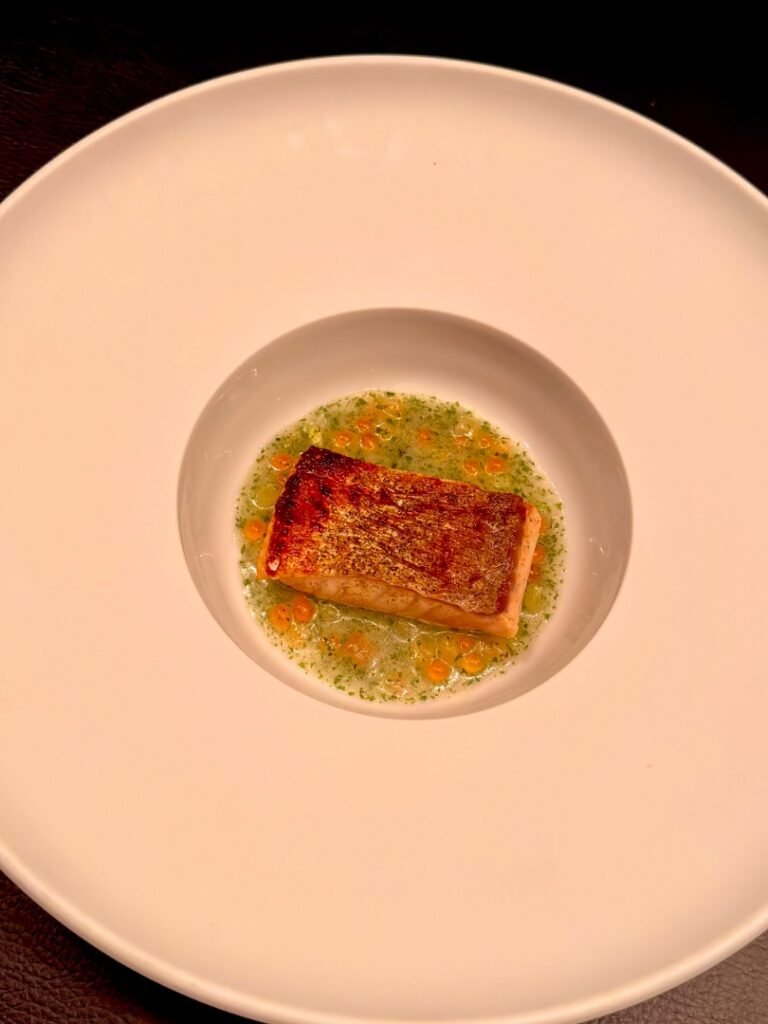
The next course was salmon. The fish was cooked perfectly, with a crispy golden skin and a tender, buttery interior. Underneath sat tomato kimchi, whose bright tanginess balanced the richness of the salmon beautifully. The dish was finished with a delicate fish broth, salmon roe, pea shoots, and a hint of chopi pepper, adding freshness and a subtle tingling spice.
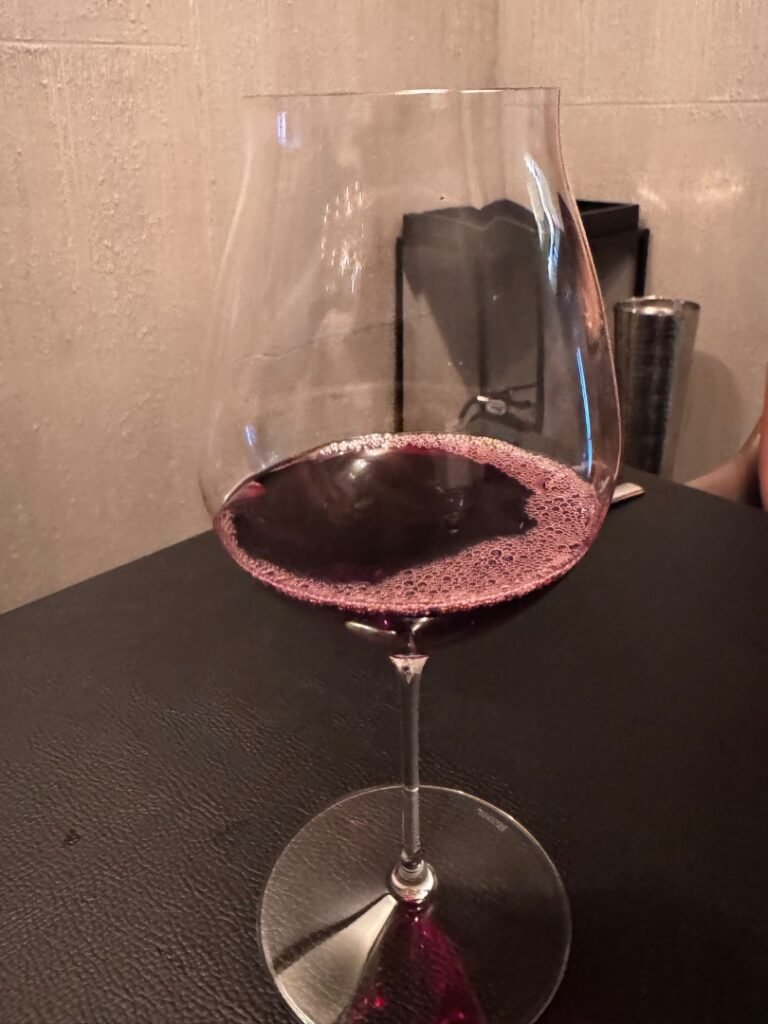
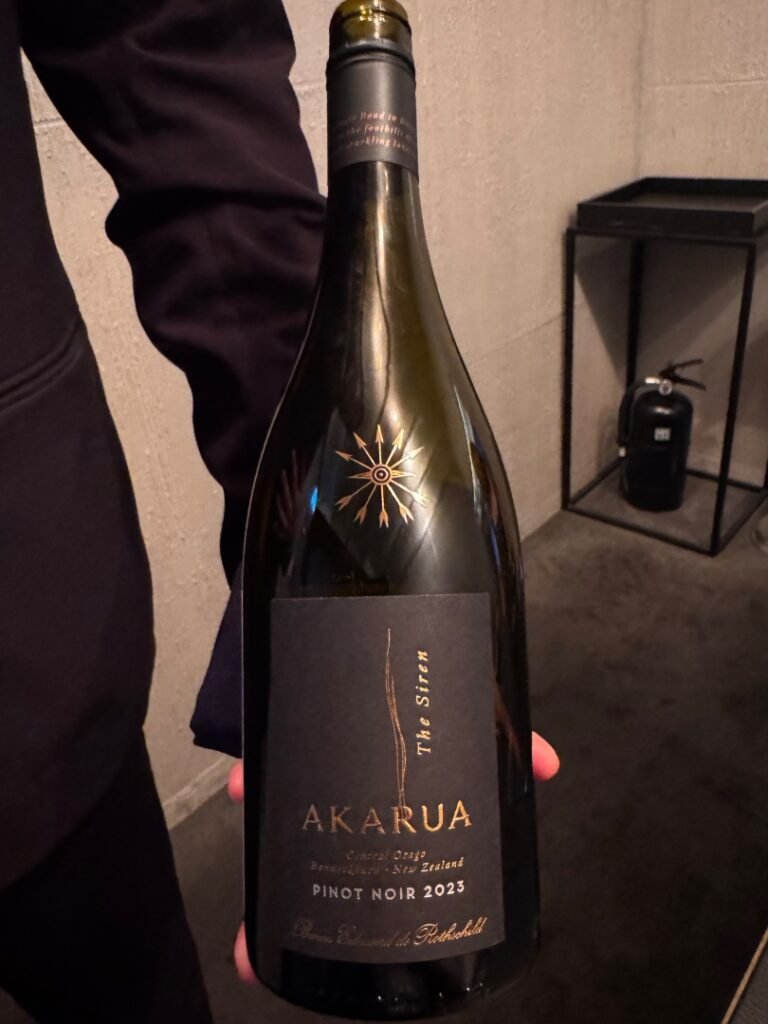
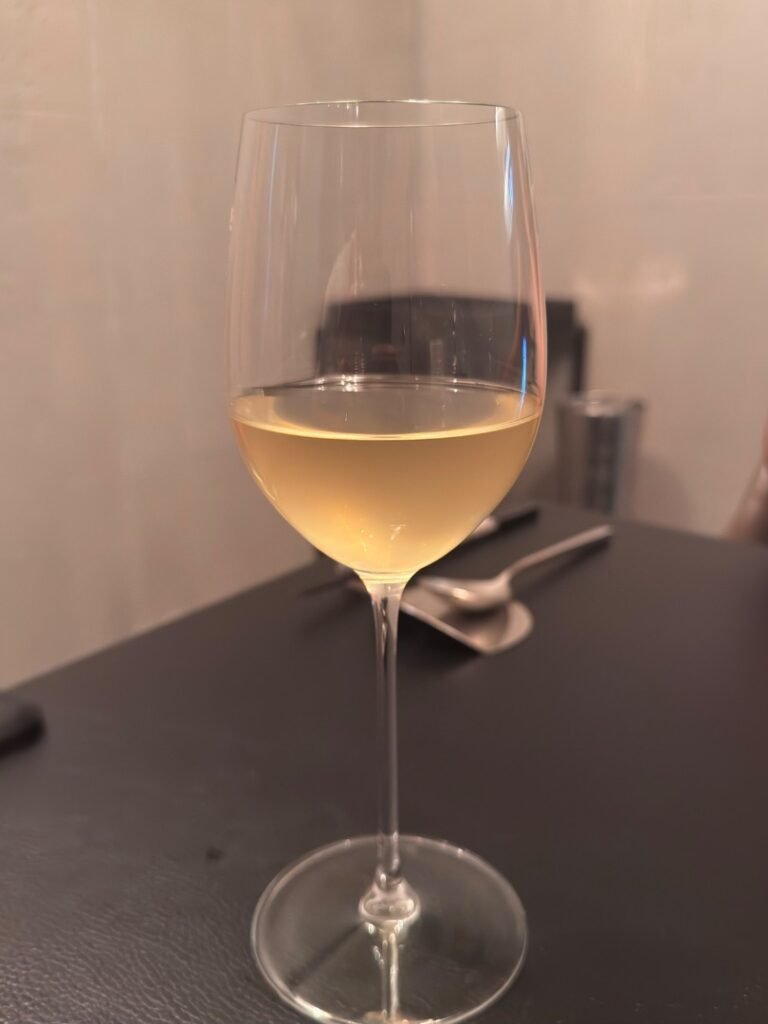
The pairing for the next course was Akarua The Siren Pinot Noir 2023 from New Zealand’s Central Otago region. Deep ruby in colour, it offered notes of ripe cherries, dark berries, and subtle spice. Smooth, elegant, fruit-forward and paired well with duck meat.
For the next course, we once again opted for both choices, Duck and Hanwoo Galbi.
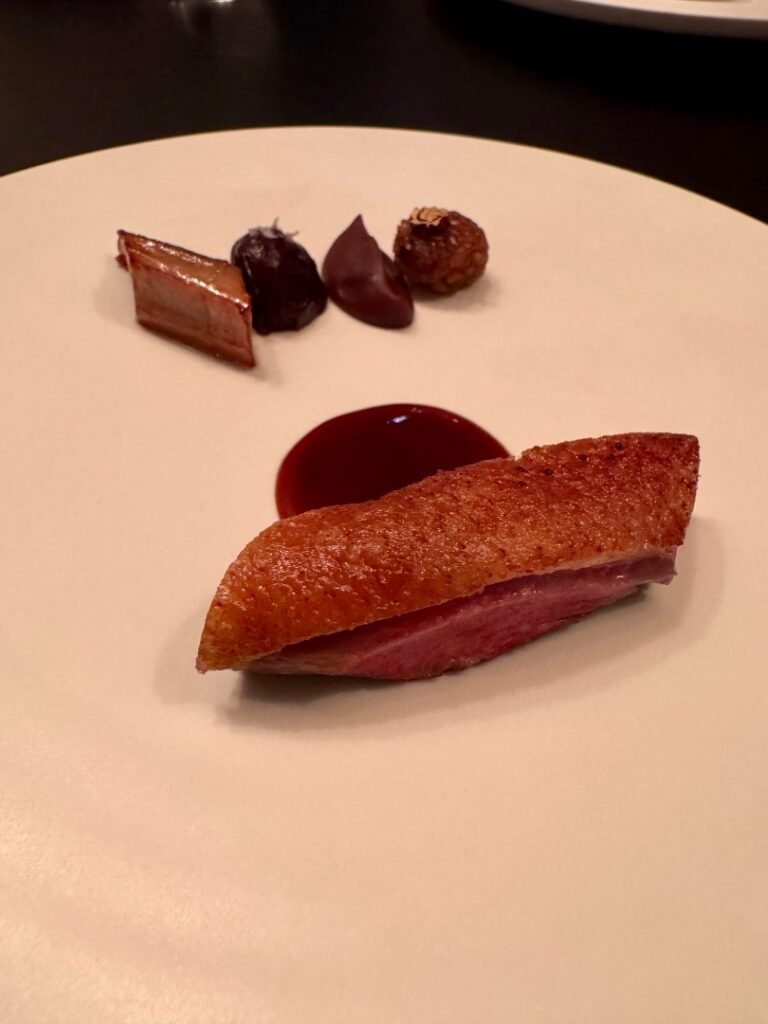
The Duck featured a perfectly cooked duck steak accompanied by an oriental herbal sauce, fried eggplant, candied chestnuts, jujube wine puree, and sweet rice cake. The duck was tender, flavourful, and delicious overall, while the accompaniments added layers of sweetness and depth to the dish.
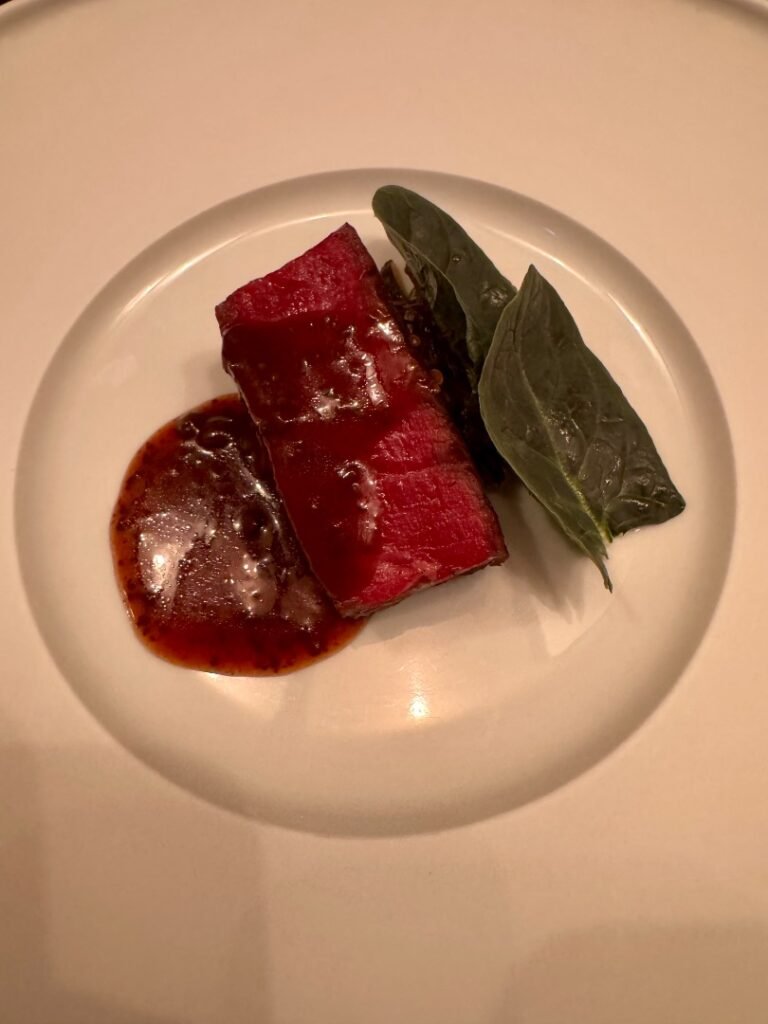
The Hanwoo Galbi was served rare and exceptionally juicy. The rich, buttery flavour of Hanwoo fat was immediately recognizable and instantly took me back to Born and Bred. It was a simple dish in appearance, but the quality of the beef spoke for itself.
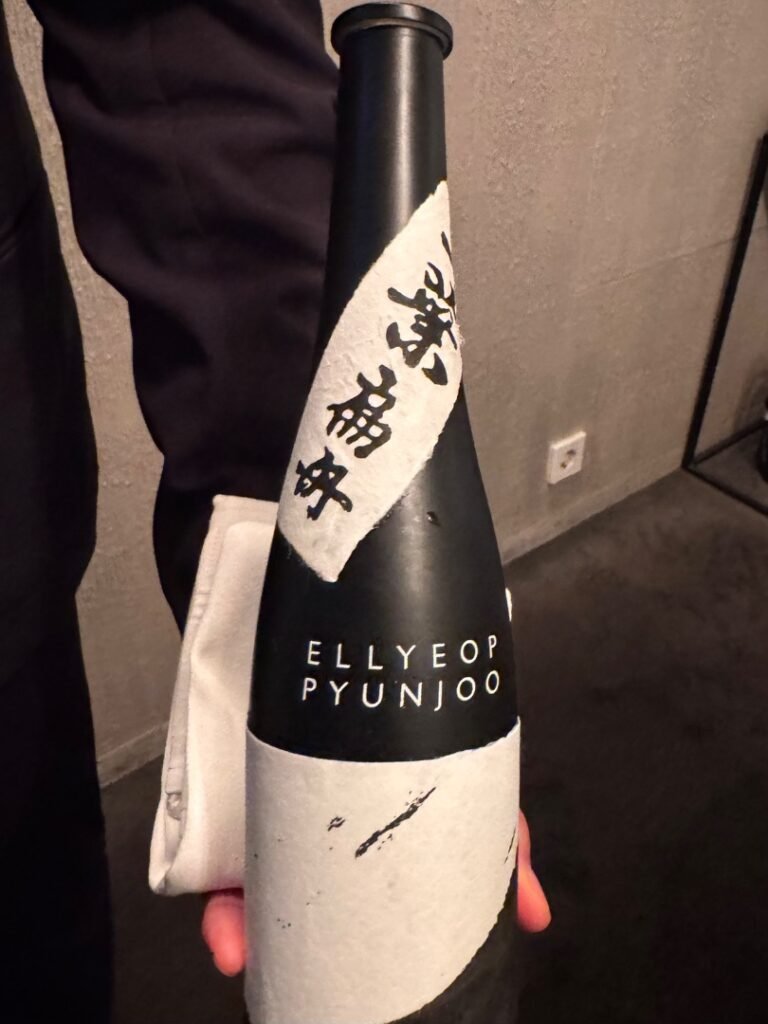
The pairing for the next course was Ellyeop Pyunjoo Cheongju, an artisanal traditional Korean rice wine. It could not have been a more fitting pairing for a meal that celebrated Korean cuisine. Smooth and elegant, it carried a subtle sweetness from the rice, and a remarkably clean finish.
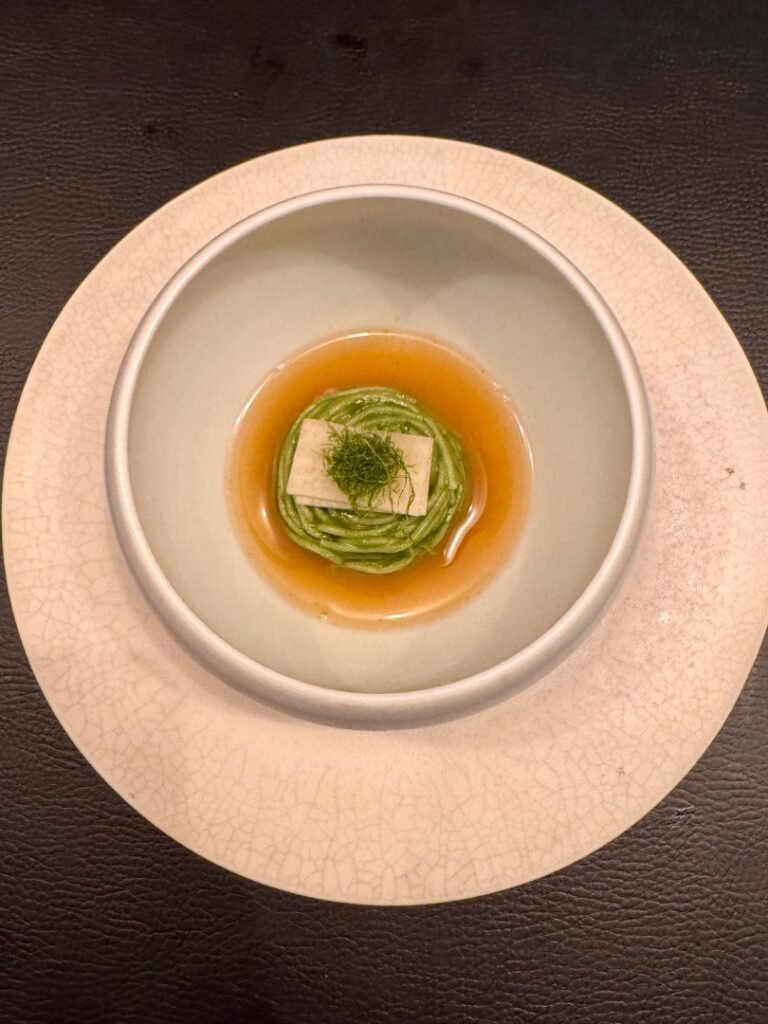
Next came Gamtae Guksu, noodles made with gamtae, a Korean green seaweed. The noodles were topped with radish kimchi and more gamtae, before being finished with a chilled radish kimchi broth. Light, refreshing, and packed with clean flavours, it was a refreshing contrast to the richer courses that had preceded it.
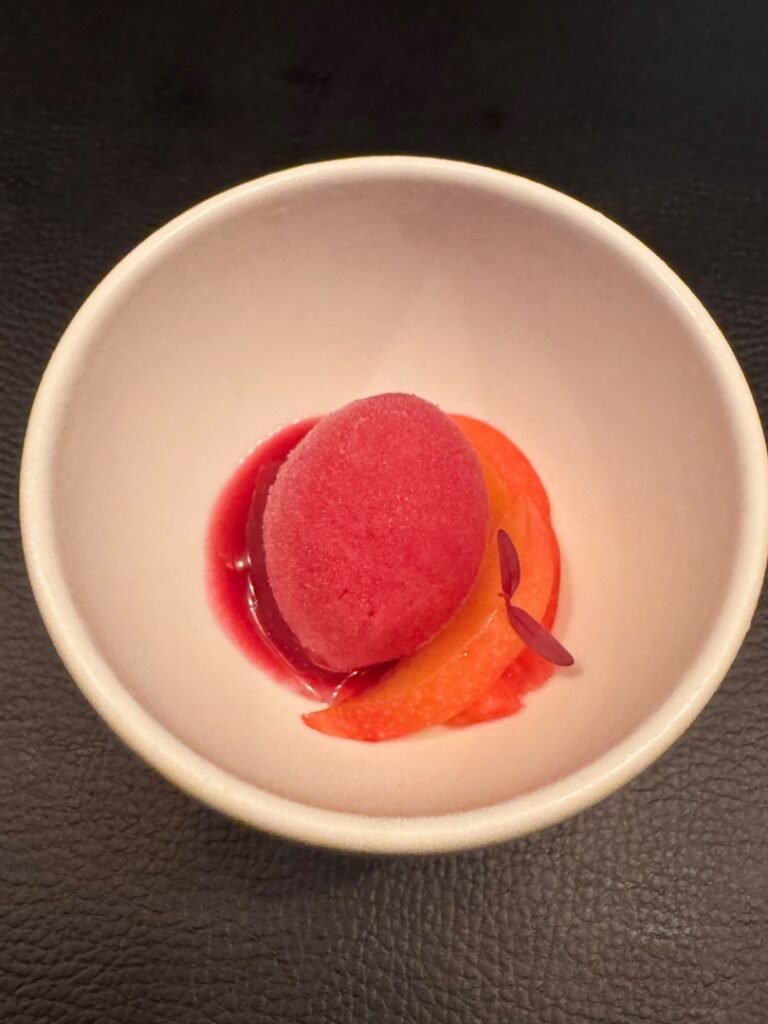
After Gamtae Guksu came the palate cleanser, Hwachae. A light and refreshing pomegranate sorbet served with slices of peach, it was the perfect reset before the dessert courses.
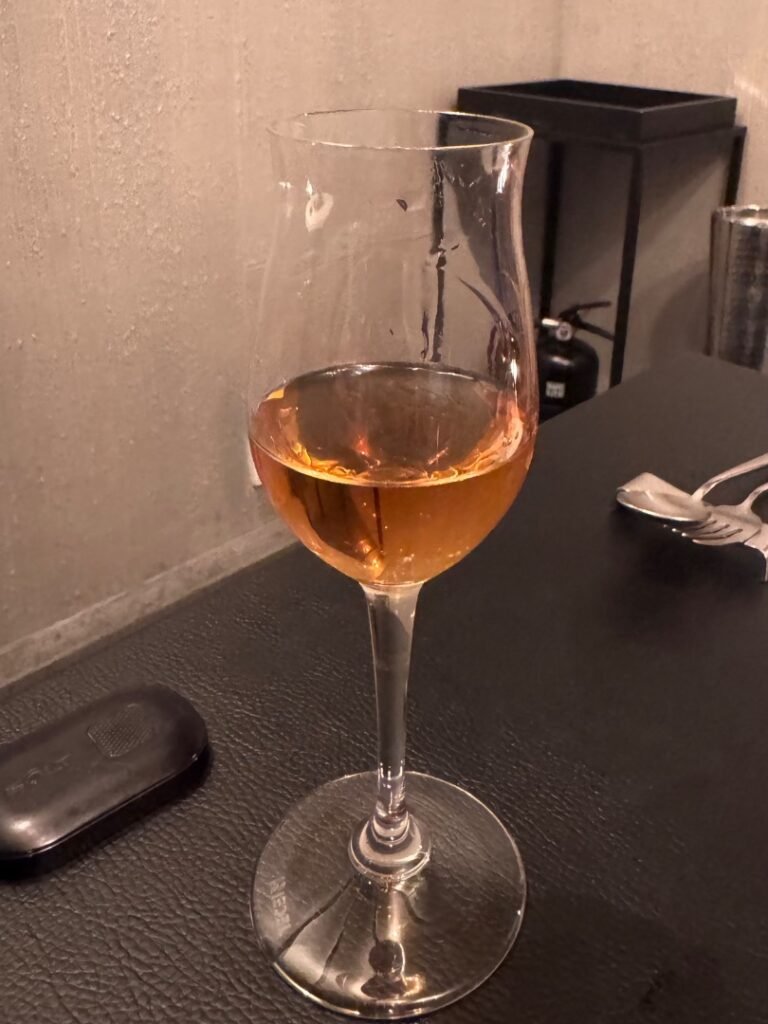
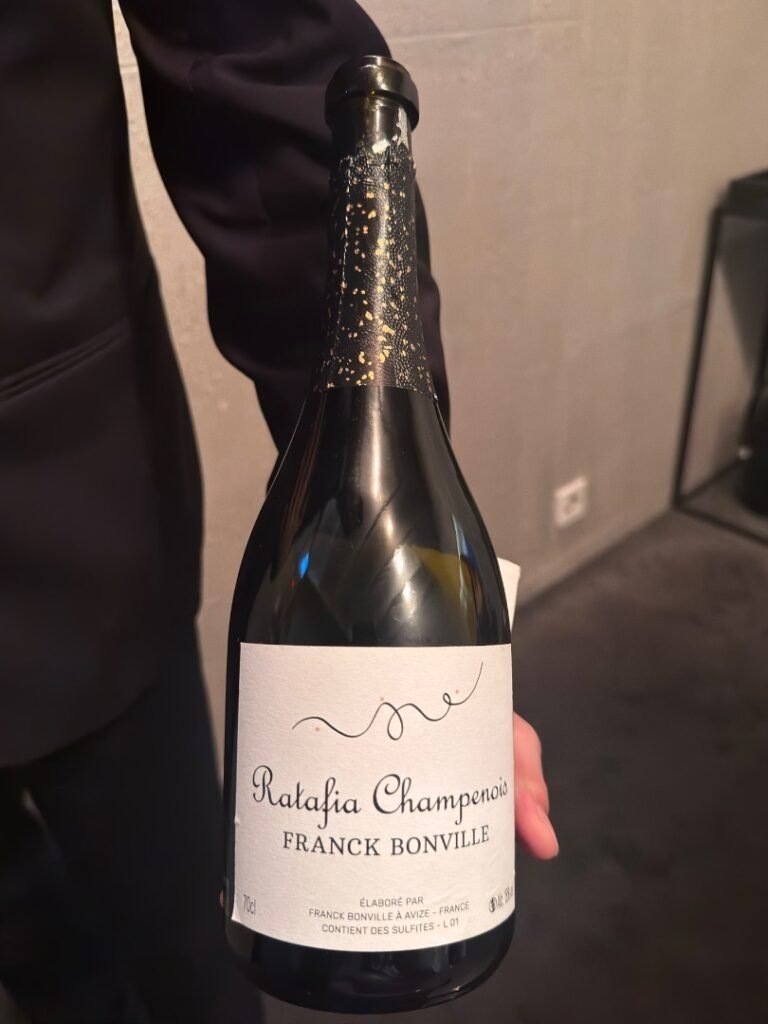
The final pairing of the evening was Franck Bonville Ratafia Champenois. It was rich, smooth, and noticeably sweeter than the previous pairings, with notes of honey, dried fruits, and caramel. It paired beautifully with the dessert courses.
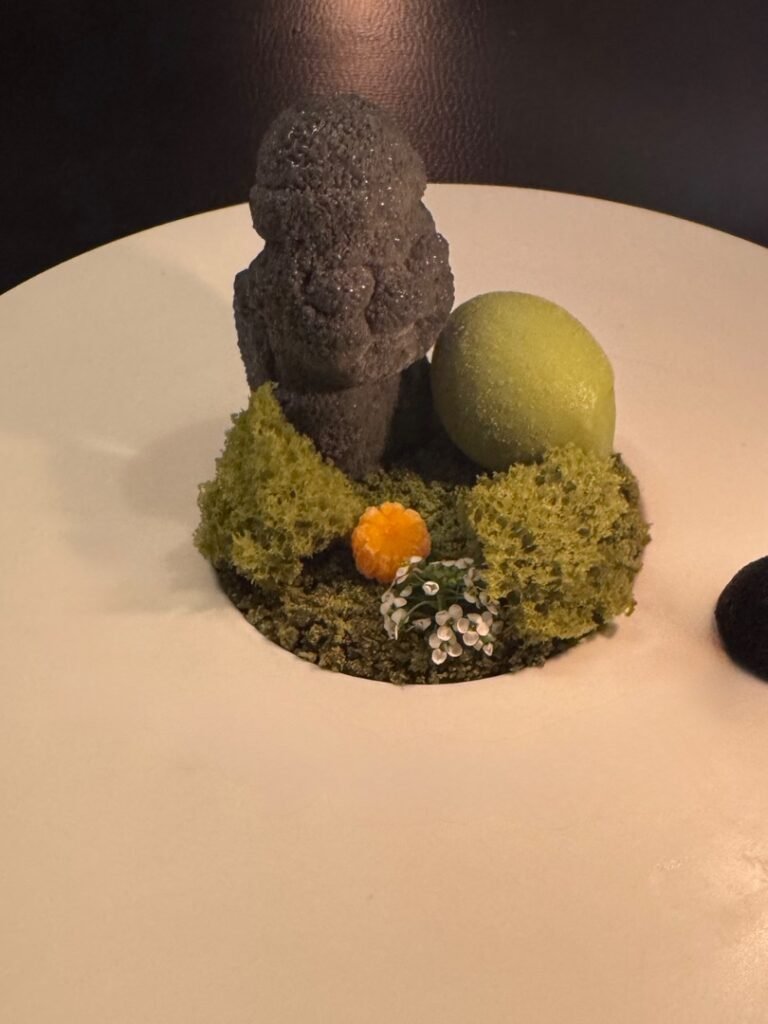
For the first dessert course, we once again took advantage of the choices available and ordered both options: Dolhareubang and Ulleungdo Maple.
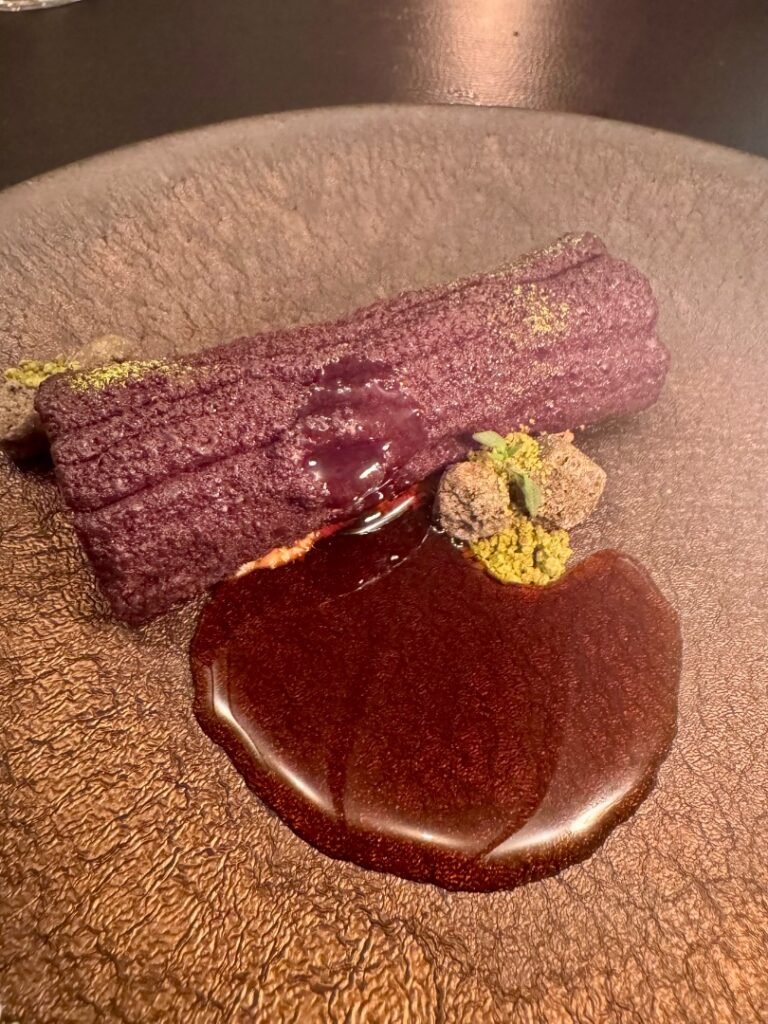
Dolhareubang, inspired by the iconic volcanic stone grandfather statues of Jeju Island. Designed to resemble volcanic rock statue, it was made with organic Jeju matcha, layered with matcha mousse and vanilla ganache, and finished with chestnut cream and jujube chocolate chips. Earthy, smooth and gently sweet, it was as delicious as it was visually impressive.
Ulleungdo Maple was inspired by the maple sap harvested on Ulleungdo Island. It featured pumpkin panna cotta, cashew nut praline, and a generous amount of maple syrup made from gorosoe sap collected from the island’s maple trees. The dessert was delicate, creamy, and beautifully balanced, with the natural sweetness of the syrup complementing the richness of the panna cotta.
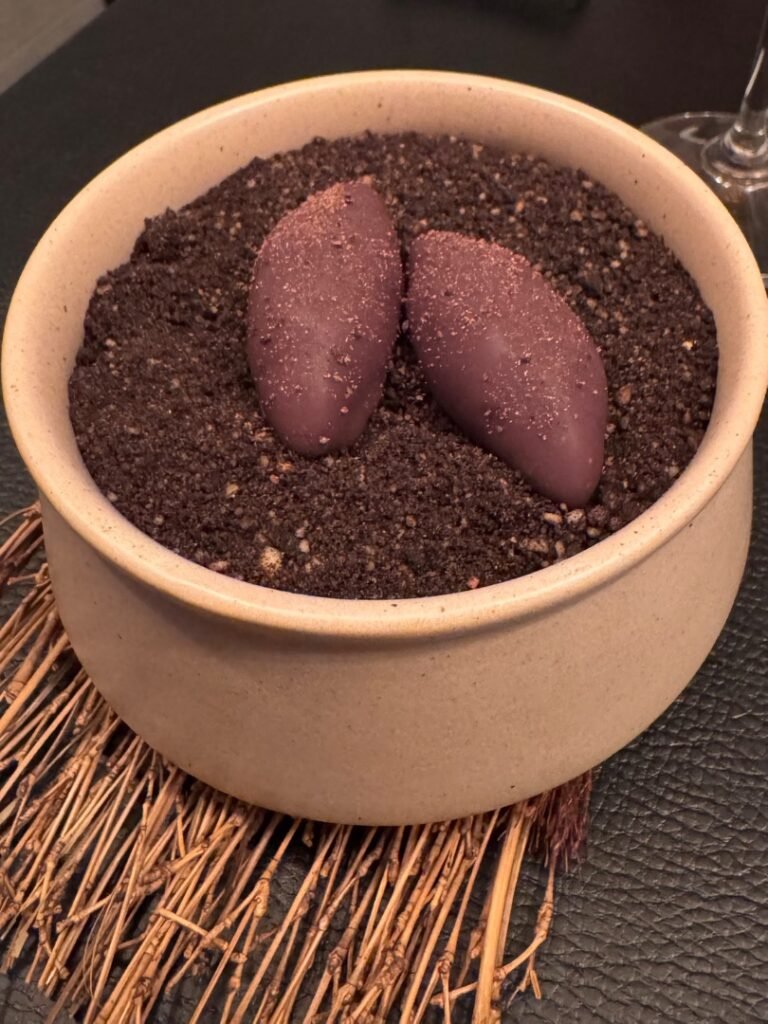
The next dessert course was, Goguma. A bite sized creation made with organic Beni Haruka sweet potatoes from Yeongam. Shaped like a sweet potato, it featured layers of smooth sweet potato cream, sweet paste, golden honey, and chewy rice cake. Coated in chocolate, each bite balanced the natural sweetness of the sweet potato with a subtle hint of bitterness from chocolate.
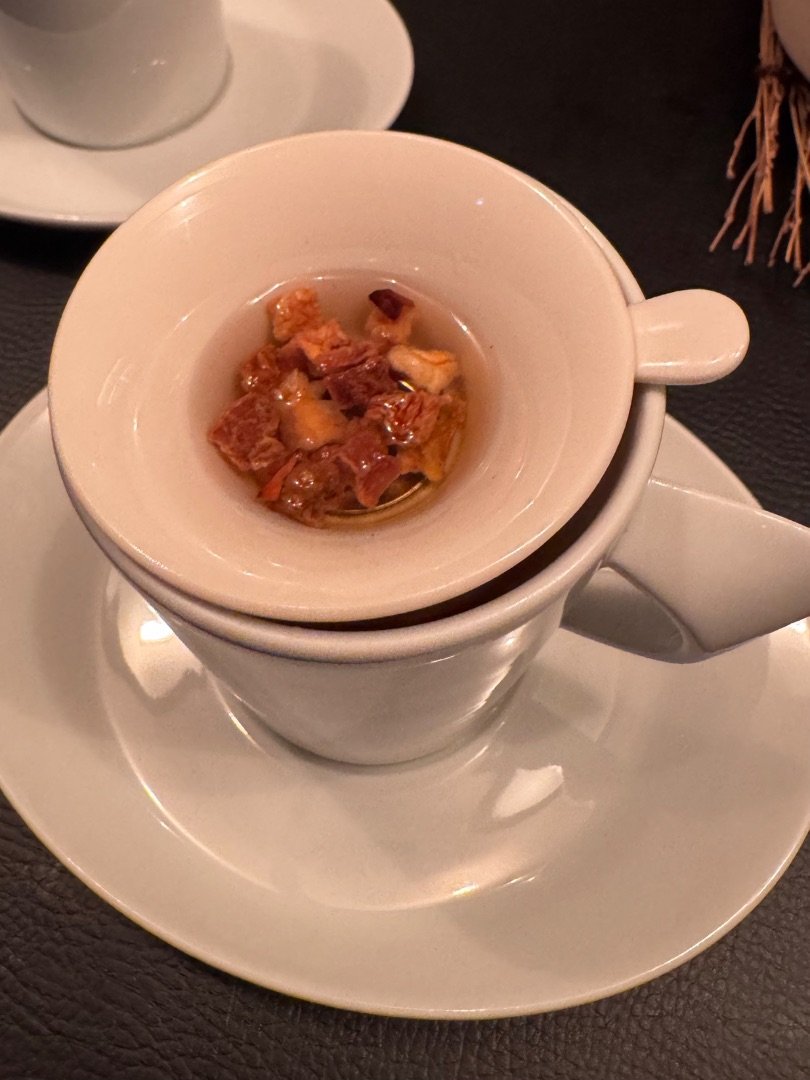
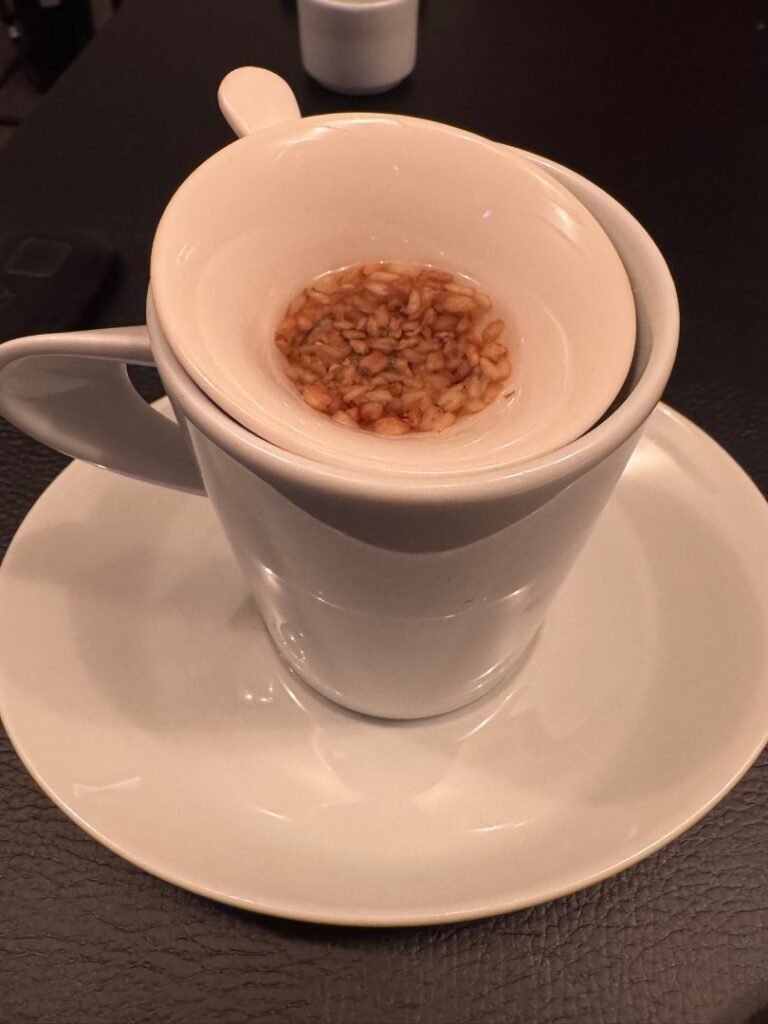
In Korean culture, it is customary to end a meal with tea. Staying true to this tradition, the meal concluded with buckwheat tea and pumpkin tea. Both were equally delicious and provided a warm, comforting finish to the dinner.
Special Mention
Though often understated, presentation and cutlery selection play a significant role in the fine dining experience. Jungsik had everything in order. From beautiful wine glasses to crockery designed specifically to suit each dish, everything felt intentional.
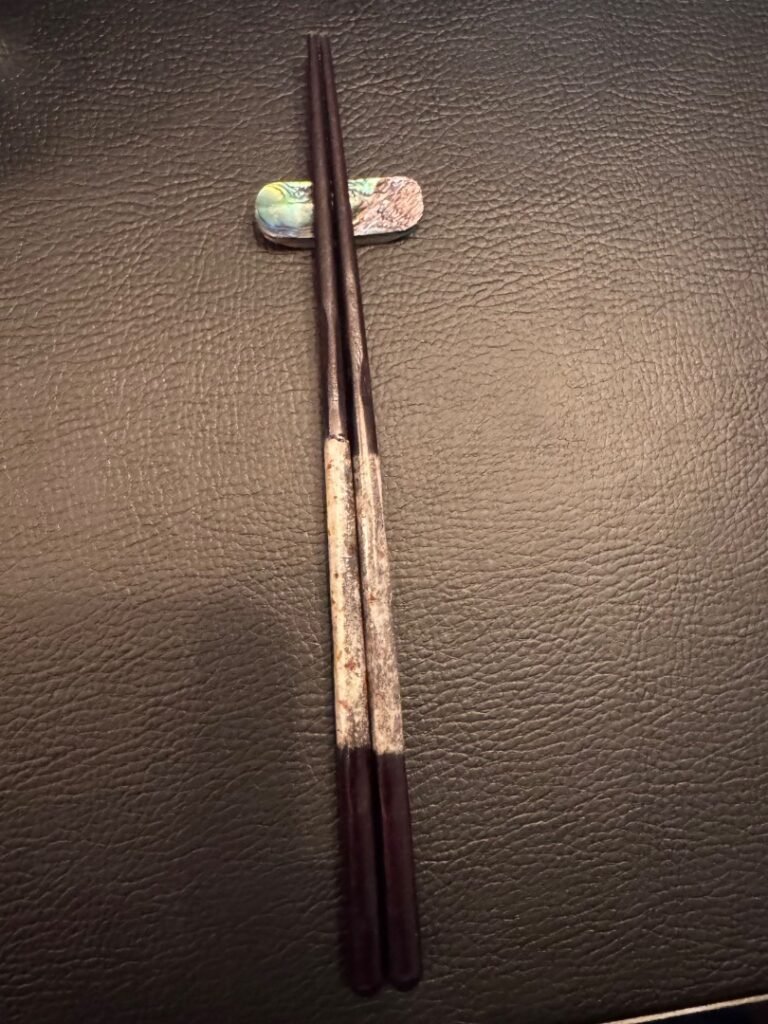
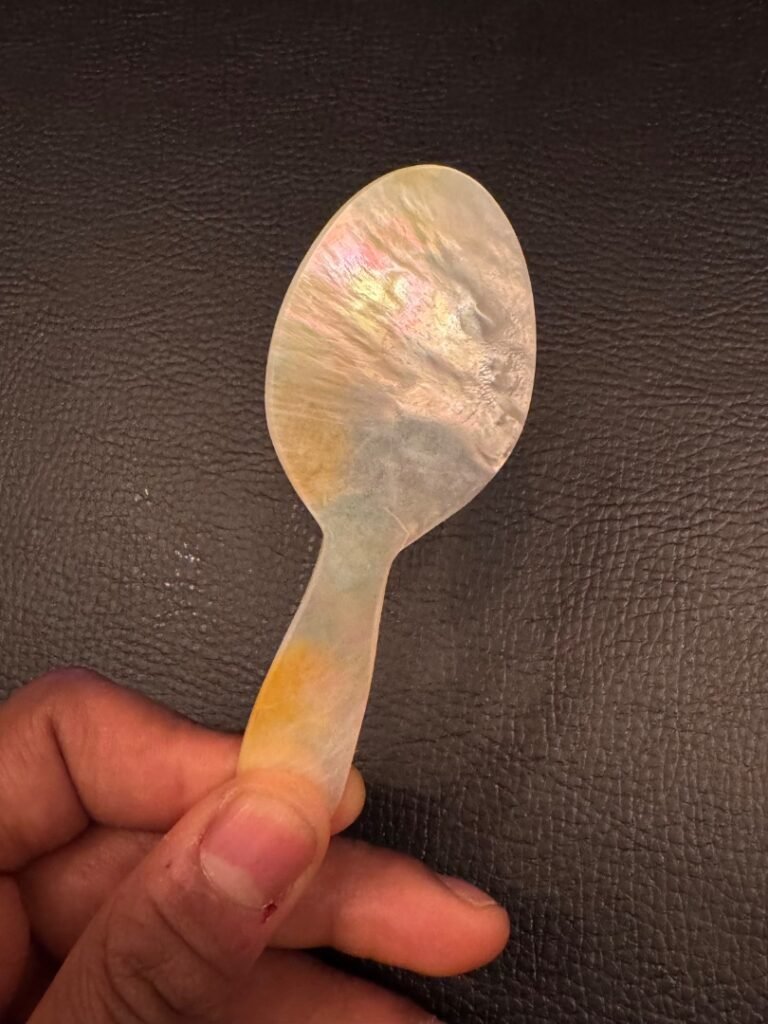
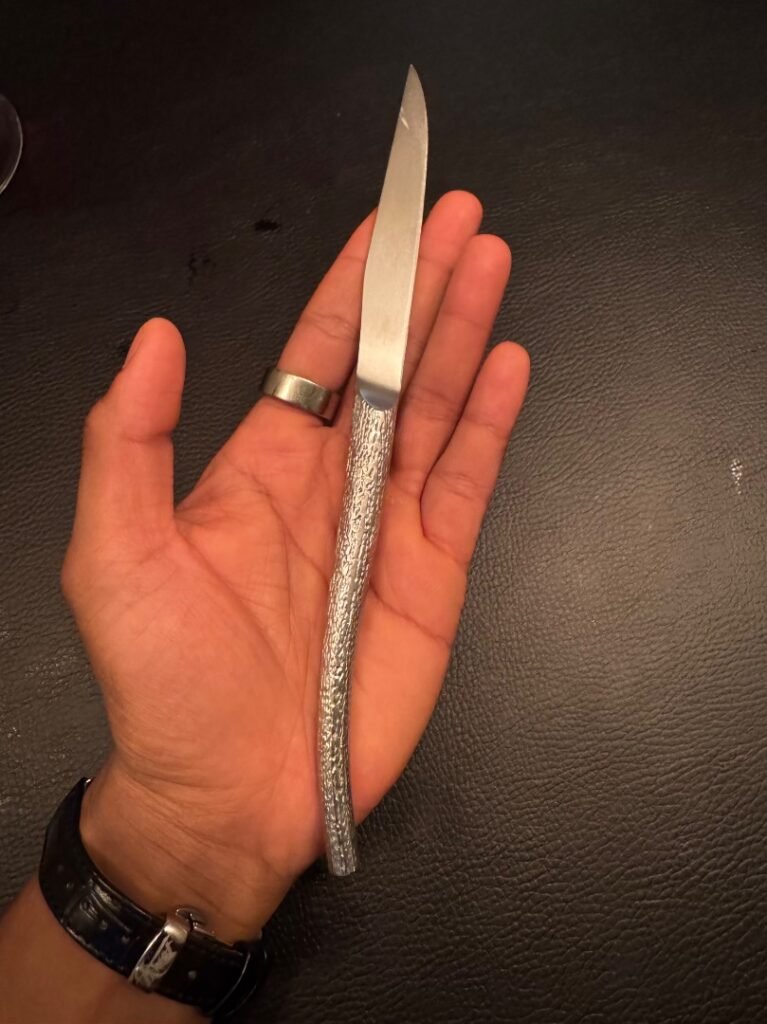
A few selections particularly caught my attention. The Wakasa lacquered chopsticks paired with a beautiful mother of pearl chopstick rest. The mother of pearl spoon served with the Kaluga caviar, as caviar is not supposed to come into contact with metal since it can oxidise certain compounds in the caviar and impart a metallic taste. And finally, the beautifully crafted, handle-heavy Forge de Laguiole steak knife that glided effortlessly through the duck and Hanwoo galbi.
Final Thoughts
The Michelin Guide was launched in South Korea in 2017, and Jungsik has held Michelin stars since the very first year. It was awarded one star in the inaugural edition and was promoted to two stars in 2018. Ever since, it has retained its two star status for nine consecutive years.
Having now dined there, I can see why. Premium ingredients, exemplary cooking, excellent wine pairings, and some incredibly creative yet delicious dishes made for a memorable experience.
The service was excellent as well. The staff made sure that the meal progressed at a pace we were comfortable with, neither rushed nor slow. There was a slight rush towards the end, but that was understandable as restaurants in Korea tend to close earlier than in many other countries. By then, we were already close to the three hour mark, so it did not really take away from the experience.
The overall experience was great. We thoroughly enjoyed our dinner and left feeling completely satisfied. Over the course of the evening, we got to experience a wide variety of flavours, ingredients, and techniques, many of which were entirely new to us. Jungsik ended up being one of the highlights of our trip to South Korea and an experience that will stay with us for a long time.